On Servant Leadership, and the Leader Who Disappeared
Servant leadership taken all the way to selflessness turns a leader into a committee. Why a team can only want what its leader visibly wants, and the small decisions that bring a leader back.

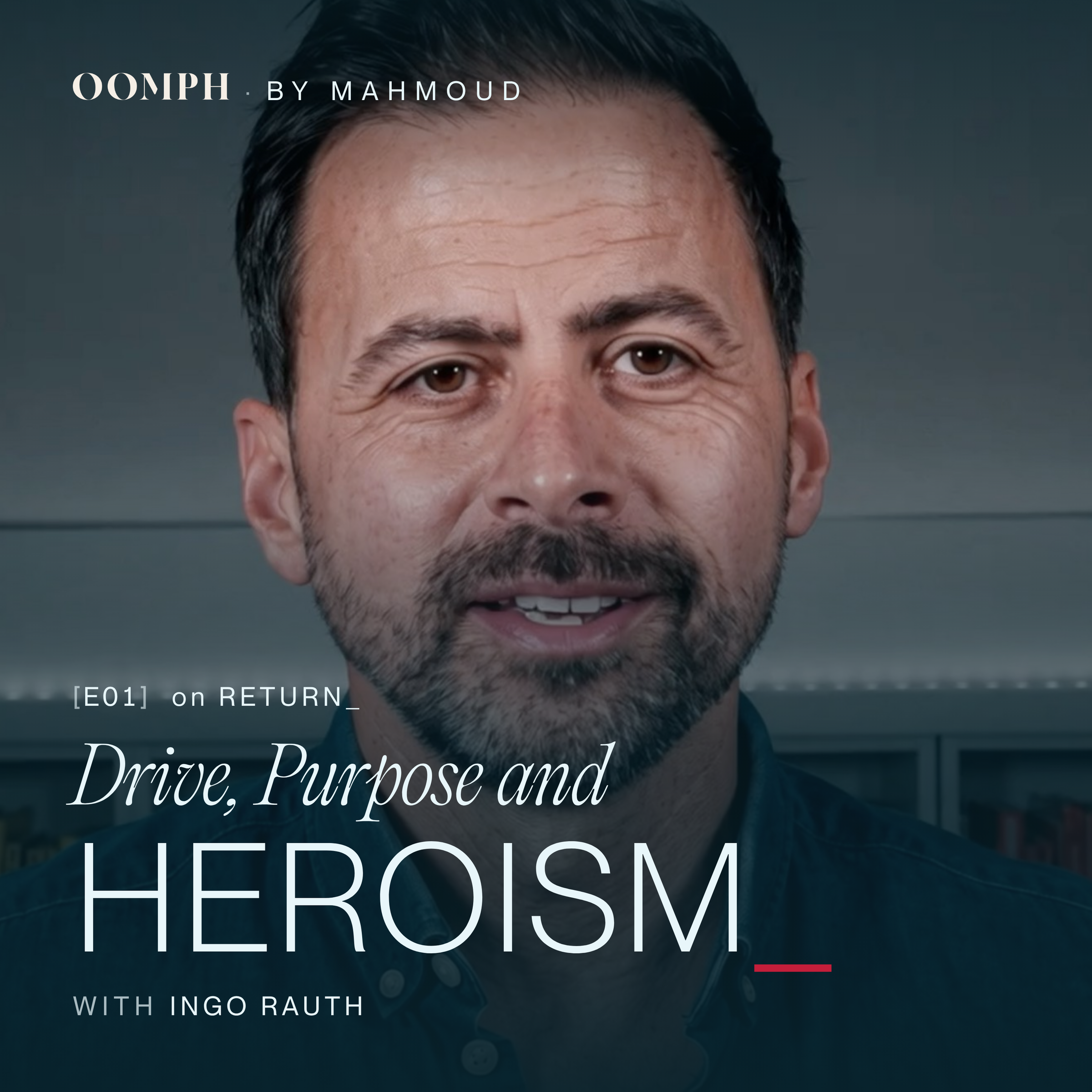
on Drive, Purpose and Heroism_
With Ingo Rauth Ph.D.Educator and Executive Coach
To the episode →The pizza order goes round the table and lands, last, on the person who runs the team. "Whatever everyone else wants. I'm fine." It sounds like generosity. It is the first visible symptom of a leader who is no longer there.
The Leader Who Orders Last
Servant leadership is the most decorated idea in the modern management library. Empathy, holding space, putting the team first. We have heard it so often that nobody asks the obvious question any more: what happens when it works too well?
Here is what happens. The leader gives way on the topping, then on the agenda, then on the direction, until there is nothing left of the leader to give way. And this is the idea this essay exists to state plainly: a leader who gives up all of his own wants cannot make anyone else want anything. Selflessness, pushed to its end, does not produce a better leader. It produces an empty chair at the head of the table.
How a Leader Becomes a Committee
On our show, recording the season opener of On Return with the educator and executive coach Ingo Rauth, we described a problem we have seen often, and found common across a network of design leaders. They believed, rightly, that everyone on the team deserved to feel represented and expressed. They were the ones holding space for everyone. And they were no longer sure they existed.
One leader put it to us with painful precision: they could not take even the smallest decision any more, because every decision had to cater to everybody else. Our word for that condition is a committee. The person starts to be turned into one. Every preference is pre-negotiated; every instinct is put to a vote that never happens out loud.
The mechanism is simple, and it is why this matters beyond the leader's own wellbeing. People do not discover what to want on their own. They learn it, and at work they learn it largely from whoever stands at the front. A leader who visibly wants something — a standard, a direction, a finish on the work — hands the room a shape for its own ambition. A leader who wants nothing hands the room a vacuum, and consensus rushes in to fill it. Consensus is reasonable. Consensus is safe. Consensus has never wanted anything in its life.
The Hero Maker Still Has a Will
This is not a cheap shot at service, and Ingo is the right witness for that. Earlier in the same conversation he argued for the leader as the hero maker rather than the hero: the one who builds people's purpose so the organization does not depend on one exhausted figure doing everything, all the time. We agree with him. It is also exactly why the disappearing leader fails.
You cannot make heroes if you have vanished. The hero maker is not the absence of a self; it is a self with a very particular appetite — the appetite to see others rise, and the taste to know which rise is worth making. Strip out the appetite and the taste, and what remains is a facilitator of other people's indecision.
Ingo was candid about the cost from the inside. For the longest time, he told us, he felt safer serving others and putting himself last. By his own account it made him miserable, at work and at home, and served no one. That is the honest ledger of selflessness: the people it is meant to help receive a leader who is quietly running on empty.
Some of the loudest voices urging leaders to sacrifice more are bestselling authors who have not visibly led an organization, while centering the world on their own books and stages. One compared letting an underperformer go to disowning a son. The analogy fails, and so does the instruction it smuggles in: that a leader's own will is a vanity to be confessed rather than a resource to be spent.
Ingo's counterpoint deserves its place: leadership, in his view, is given, not assumed — people confer it by following. We take the point and draw the conclusion. People follow someone. Nobody follows a vacancy.
Small Decisions, Made Out Loud
The way back is not a personality transplant. It starts embarrassingly small, which is the point.
- Decide the small things, visibly. Name the topping. Choose the restaurant. Pick the font. The decision does not need to matter; the habit of having a will does.
- Say what you want before you ask what everyone else wants. The leader's voice is heard within the leader first, then by the room. Order matters; the first stated preference shapes every one that follows.
- Ask the right-role question. Ingo's test is the useful one: if the role no longer confirms you, ask whether you are in the right role. Some people genuinely love making others the heroes, and organizations need them. Others are waiting for something the role will never give back. Both deserve an honest answer.
Wanting, in plain sight, is part of what a leader is for.
—OOMPH Editors
Service Is Not the Enemy
None of this argues for the leader as the centre of every story. Ingo is right that a leader must serve the environment they are in; a leader who serves only himself has simply found a different way to leave the room. Service is not the enemy. Disappearance is. (Why purpose itself keeps getting misfiled as the soft part of the job is a separate argument, made in On the Hardest Thing We Call Soft.)
The test is not how much a leader gives away. It is whether, after all the giving, there is still someone at the head of the table who wants something — out loud, for the work, on behalf of everyone. Teams can forgive a leader who wants the wrong thing. They cannot catch fire from one who wants nothing at all.
on Drive, Purpose and Heroism_
With Ingo Rauth Ph.D.Educator and Executive Coach
To the episode →More to Read
Adjacent threads. If this essay landed, these will too.