On Stunning, and the Beauty You Never See
Beauty in a service is not how it looks — it is how completely it disappears. On stunning experiences, the three things that make a service beautiful, and the art of the invisible.
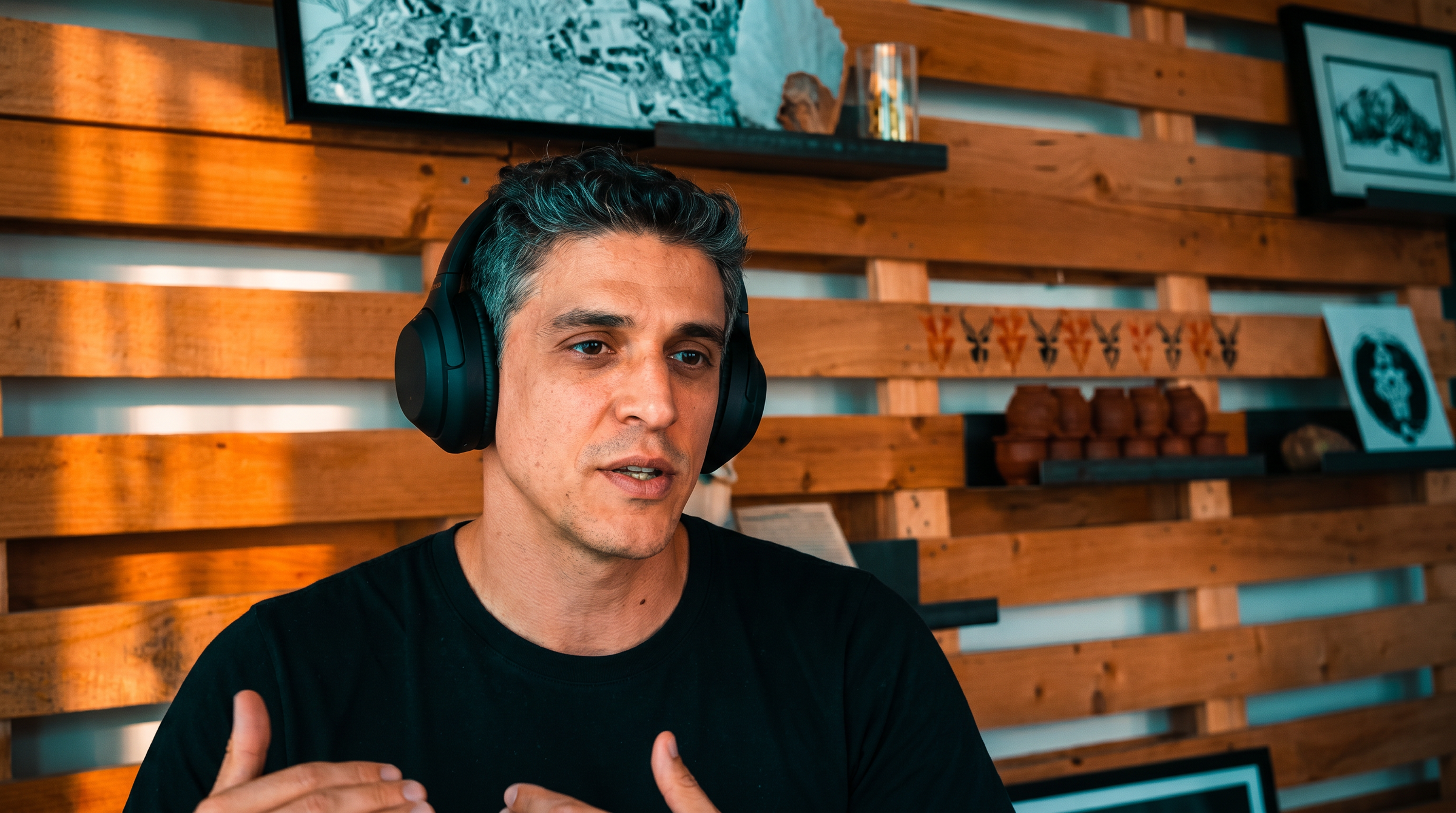
on Stunning Moments_
With James SamperiDirector of Engine’s studio
To the episode →The Uber is paid for before you reach the curb. Your phone opens a hotel-room door for a room you were checked into somewhere over the Atlantic, the whole front desk dissolved into an Apple Wallet. You walk out of the grocer with the bag already in your hand and the payment, invisibly, already done. None of these moments announces itself; each one is engineered, with enormous effort, to vanish. And that is the tell. We reach for the word stunning and picture spectacle — louder, brighter, more. The most stunning services on earth are the ones you never catch working at all.
So it is worth asking, plainly, what a beautiful service actually is — because it is not a pretty screen laid over a clumsy process.
What beauty is made of
On our show, James Samperi, Managing Director of Engine — the service-design firm — defines beauty in a service as three things fused into one. There is the aesthetic: how it looks as you move through it, the touchpoints, the rooms, the faces you meet. There is the way it works — the old Dieter Rams and Steve Jobs creed that beauty is not how a thing looks but how completely it functions. And there is the elegance with which it solves your problem, the sense that something difficult has been made to feel like nothing at all. Aesthetic, ease, and elegant resolution, welded so tightly the seams disappear.
That is the liftable definition, and the part most brands miss is the welding. A gorgeous interface bolted onto a humiliating process is not beautiful; it is a beautiful liar. Beauty in a service is whole or it is nothing.
The art of the invisible
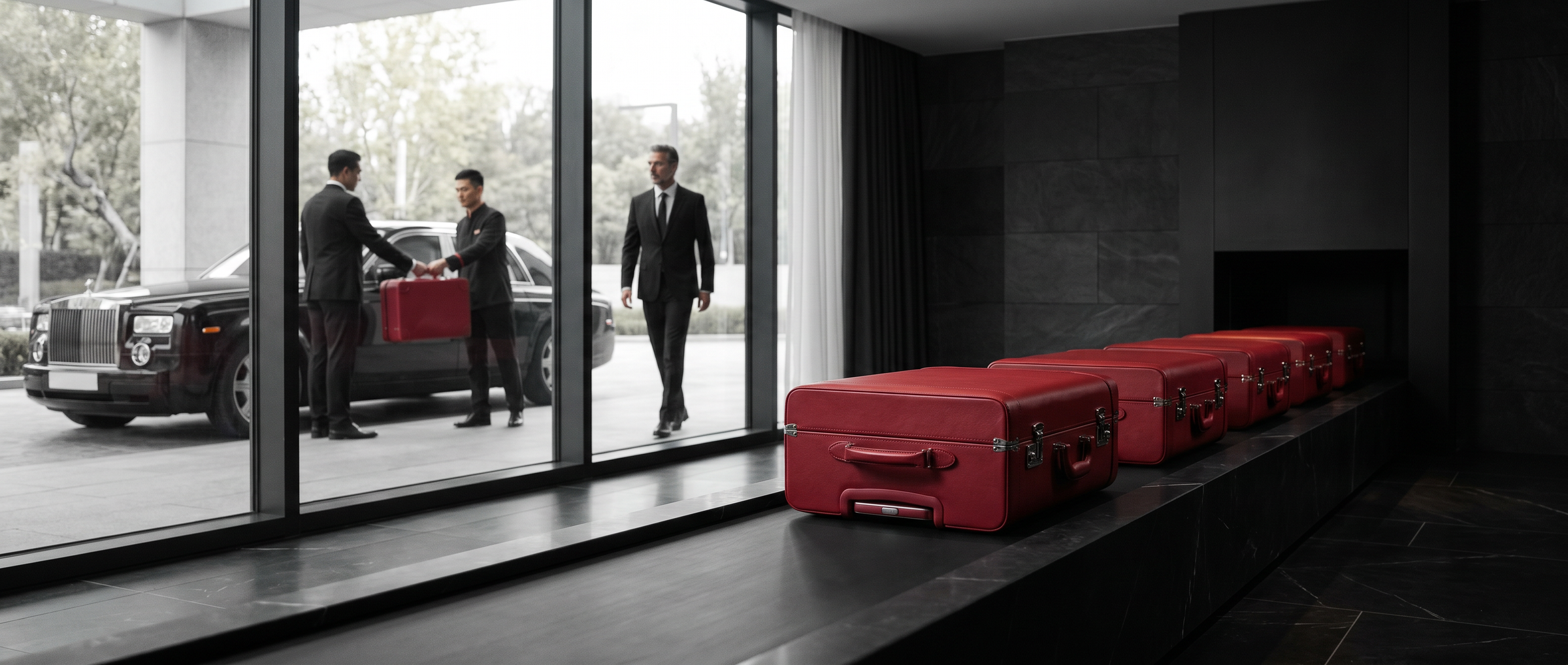
The purest form of it has a name James uses: the art of the invisible. Years ago, designing Virgin Atlantic's first-class arrival, the studio understood that the seduction was not the limo or the lounge — it was the seamlessness, and what threatened the seamlessness was the operational grind of actually catching a flight. So they dissolved it. You check in inside the car. You choose your dinner on the way. And then the moment that gives the whole thing away as craft: the chauffeur lifts your bags onto the pavement, where scales built into the pavement weigh them and a bollard prints the tag — your luggage handled, processed, gone, before you have stepped out of the car. You never see it happen. You only feel that something heavy has been taken from you.
This is beauty as the disappearance of effort, and it is the opposite of spectacle. Spectacle wants to be seen. Elegance wants to be felt and then forgotten.
Beauty comes in two sizes
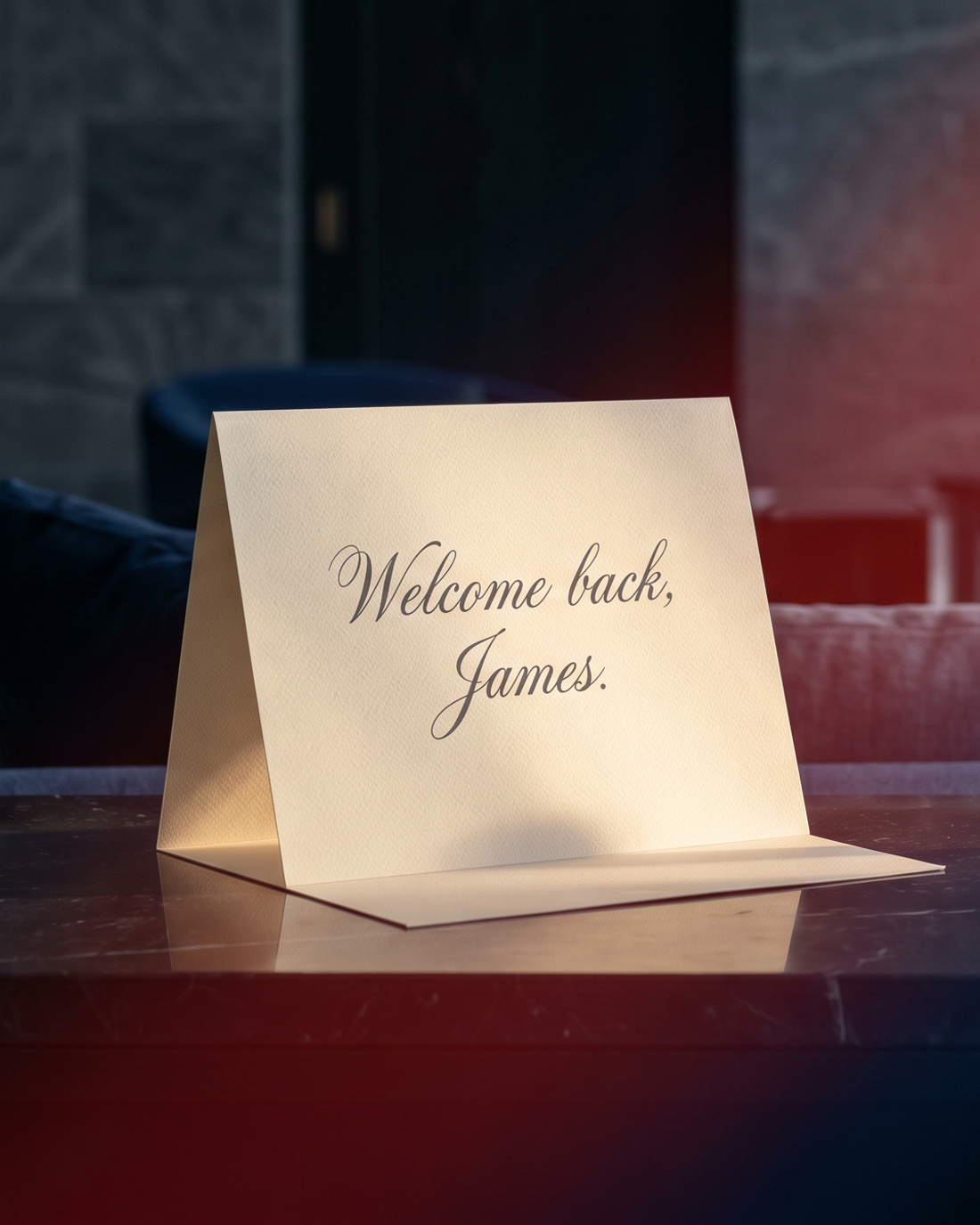
It does not all have to be grandiose. Beauty, James notes, is genuinely in the eye of the beholder — it can be a cathedral of an experience or a single detail done with impossible care. Mr Porter, the menswear house, repackages every label it sells into its own beautiful box, slipped with a hand-scripted note that knows your name. The product was made elsewhere; the beauty is in the wrapping and the gesture. A micro-moment can stun as completely as a grand one. The discipline is deciding, deliberately, at which scale you intend to be beautiful — and then refusing to be ugly anywhere the customer can feel it.
The service that makes you more
There is a reason the elegant resolution matters most of the three, and it is not efficiency. A service that solves your problem with grace hands you something back: a more capable version of yourself. James calls it superpowering — you, plus the service, supercharged. A parent's secret wish is not a feature; it is more time, more sleep, more control. Anything that returns those is not a convenience, it is a power. And the highest version of that power is anticipation — the service that reads you before you ask, the neighbourhood store in Dubai that learns its community so precisely it stocks only what these particular people want and quietly drops what no one buys. To be known that well is its own kind of beauty; we make the fuller case for being seen in its own essay, and it belongs here too, because anticipation is invisibility turned toward you.
Felt, not seen
The honest caveat: invisible is not the same as easy, and it is certainly not cheap. Effortlessness is the most expensive thing in design, because someone has to absorb all the effort you are no longer allowed to see. Beauty is not a coat of paint applied at the end; it is a decision made at the beginning about whether the whole thing will hold together. And it is not the only way to make a service felt — surprise is the other, and a louder one, which we trace through the dramatic arc elsewhere.
But this is the one that lasts. The most stunning thing you will ever build is a service so beautiful that no one notices the work — only that, somehow, they feel lighter, more capable, more themselves on the way out than they did on the way in. Make them feel it. Do not make them watch you do it.
The Virgin Atlantic drop-off: a chauffeur setting bags onto a pavement with weighing scales flush in the stone, a bollard quietly printing the luggage tag. The whole point is that the machinery is buried — the beauty is in what the traveller never sees. Caption suggestion: "Handled before you're out of the car."
on Stunning Moments_
With James SamperiDirector of Engine’s studio
To the episode →More to Read
Adjacent threads. If this essay landed, these will too.