
The Conversation
Mercedes, Disney, Virgin Atlantic are some of the brands James Samperi, a global award-winning design leader speaks to us on.
Oops — did we already kill the surprise? Not quite. Even if you're not a designer, the examples James shares here will get under your skin. This episode doubles as a sneak peek into James’s co-authored book “Customer-Driven Transformation” a must-read if you want to really get your brand up into a different space.
The Russian roulette and the art of the invisible are two of my favorites — look for them.
This episode is on stunning moments, and we did our best to get James to shine and stun on camera — some of the closest close-ups we have. Enjoy!
The conversation, chapter by chapter
Every chapter with what was said in it. Open one to read it, or play the episode from that moment.
00:0001Introduction
Read
James SamperiIf you can develop incredible experiences and incredible services, it's not only better for the organisation, it's better for the people using them.
James SamperiBeauty can be an overarching experience, to be amplified.
Mahmoud AbdelrahmanYour happy customer today would leave you for a promise to be happier with another brand.
James SamperiCombine that with the idea of surprise. Even for the most unsexiest stuff, you can really make a big difference, elevate your service and your experience above the basics.
James SamperiHi, I'm James Samperi. I'm on OOMPH by Mahmoud.
Mahmoud AbdelrahmanThis is Season 1, O for OMG, On Magic and Surprising Customer and Employee Experience.
00:5402What makes a service stunning
Read
Mahmoud AbdelrahmanYou are, in your book, speaking about designing services beautifully. As a brand in general, Engine has been pushing forward that idea: beautiful services, beautiful projects. And here we are speaking about OMG, and delivering that feel in the experience of customers and employees. I would want to go from... on the beauty scale, I would call this more like stunning services and stunning moments, something that really takes customers and employees by awe, because I always feel that these are things that communicate to a client or to an employee that life can be really different. There is an alternative version of this, and you deserve to have it.
Mahmoud AbdelrahmanAnd I believe in the marketplace today, if you don't do that for your brand, another brand will do. So from your point of view, if we speak about beautiful services or beautiful moments or stunning moments, what does that actually mean?
James SamperiOne of the definitions that we talk about in our book is that beauty is this combination of three things coming together. It's the aesthetic of the service, so how it might look to you as you're moving through. So that might be the various touchpoints, or the people that you meet, or the environments that you're in. There's this idea of usability: this whole idea, the Dieter Rams, Steve Jobs school of it's not how something looks, it's how something works that is beautiful about the design.
James SamperiAnd the third thing is it really solves your problem elegantly. And this idea of elegance and this idea of problem solving combined, fused with the aesthetic and fused with the sort of easy to use, is the thing that we think can inherently make something beautiful. So beauty can be an overarching experience, to be amplified to a certain extent, beyond the normal expectation, or beauty can be very much in the detail.
James SamperiSo I think that whole phrase, beauty is in the eye of the beholder... it's important to understand that it can be a very micro moment, or it can be something which is hugely grandiose and impactful. So yeah, that's the dynamics: those three things coming together, that we talk about as beauty in the context of services and experiences.
Mahmoud AbdelrahmanCan we initially run through a few examples that help people understand what it is that we mean here by beautiful services or beautiful moments or stunning moments?
James SamperiSo let's look at some of those different components. So Disney's always held up as a great experience brand. I think obviously they create these magical experiences. You could just look at some of the Star Wars experience, where you can actually go and stay in the Star Wars hotel. All of the windows are LCD displays which show Tatooine on the outside, all of the Jedi sort of clothing; that is immensely immersive. You stay there for a couple of days. And for someone who is a Star Wars aficionado, what could be better than sort of experiencing that? But actually, when you look at some of the other things they're doing within their theme parks...
04:5203Ending the queue, and Southwest's rap
Read
James SamperiOne of the big challenges of theme parks is the idea of... it's very focused on kids, obviously. What are kids rubbish at? Queuing. What do we know about theme parks? Queues take up the majority of the time. So actually their virtual queue system is super, super amazing, which is essentially you can book a slot within a queue. You don't actually have to wait in line. You can go and experience the rest of the park. It can give you an alert and a countdown for when your slot is available, and they manage the queue virtually.
James SamperiSo effectively what you can do is pre-book all of your rides before you go, and then you're essentially seamlessly moving throughout the park and experiencing everything without actually wasting all that time queuing in line. And I guess one of the big things is: okay, that's great from a visitor's perspective, but actually what they've realised is that they've managed to not only improve and surprise and delight the visitors, they've also managed to sort of improve their pockets, because people are spending more time spending than they are queuing. So it's a real win-win for them.
James SamperiAnd then I guess the last one is, I guess, one of the things that you mentioned right at the beginning, and it's the idea of people and the role that people play within brands. And I think one brand we always look to, especially when we're thinking about the travel and tourism industry, is... how do you get this balance between sort of codifying or sort of structuring the kind of customer service that you might get? So in essence, you're sort of removing the humanity from the people that you're speaking to. And then how do you get a balance between that, the operations, but also, if you've recruited the right people, you want to be able to allow their personalities to bleed into the service and to affect the service.
James SamperiAnd I think the people that get this absolutely right is Southwest Airlines. And it's an example that gets used a lot, but it's something that we use all the time, which is: if you've got a different way of doing the safety announcement on the plane, that's still going to be focused on keeping people safe, but you want to do it in a rap, then you go for it. We want you to showcase what you guys can do, because actually that brand is manifest through that experience of that person.
James SamperiAnd because they're sort of implanting their own personality into that brand, it's this sort of mutual, sort of cyclical sort of experience that you can have, but through the people that you're experiencing the service with. So from my perspective, all of those things in one sense are different forms of stunning, but actually, what we would describe those as... that's how you begin to start having that beauty conversation when you're talking about services.
Mahmoud AbdelrahmanThis is very interesting, James, because I think one of the things I feel do really differentiate those brands is how much restriction you have on your people, and how much sort of letting go, to shine, to bleed into their sort of life energy. And since we have come from the industry world into the services world, we still try somehow to make sure that everyone acts the same way, to lower the variance when operations are going.
Mahmoud AbdelrahmanAnd this basically tries to turn people into machines, while there is the element of beauty of those characters, that they can actually do all this mass customisation without really thinking about it. I mean, I was speaking to some of the guests on surprise, and they said it doesn't have to be something massive, crafted. Just let people be themselves and you'll be really surprised with what happens.
09:1704The art of the invisible
Read
Mahmoud AbdelrahmanSo as a designer, you are designing stunning moments, beautiful moments, beautiful experiences, James. What are the sort of things that you are aiming at?
James SamperiThere's a number of things, but I've got five that might be sort of useful just to talk about. The first one is this idea of: how do we create some elegant choreography? So how do we link things elegantly together, so actually it feels seamless, it looks amazing, it feels natural, et cetera? So one of the phrases that we always use is the art of the invisible, which is a really, really sort of powerful idea that we've tried to build into some of the services that we've designed.
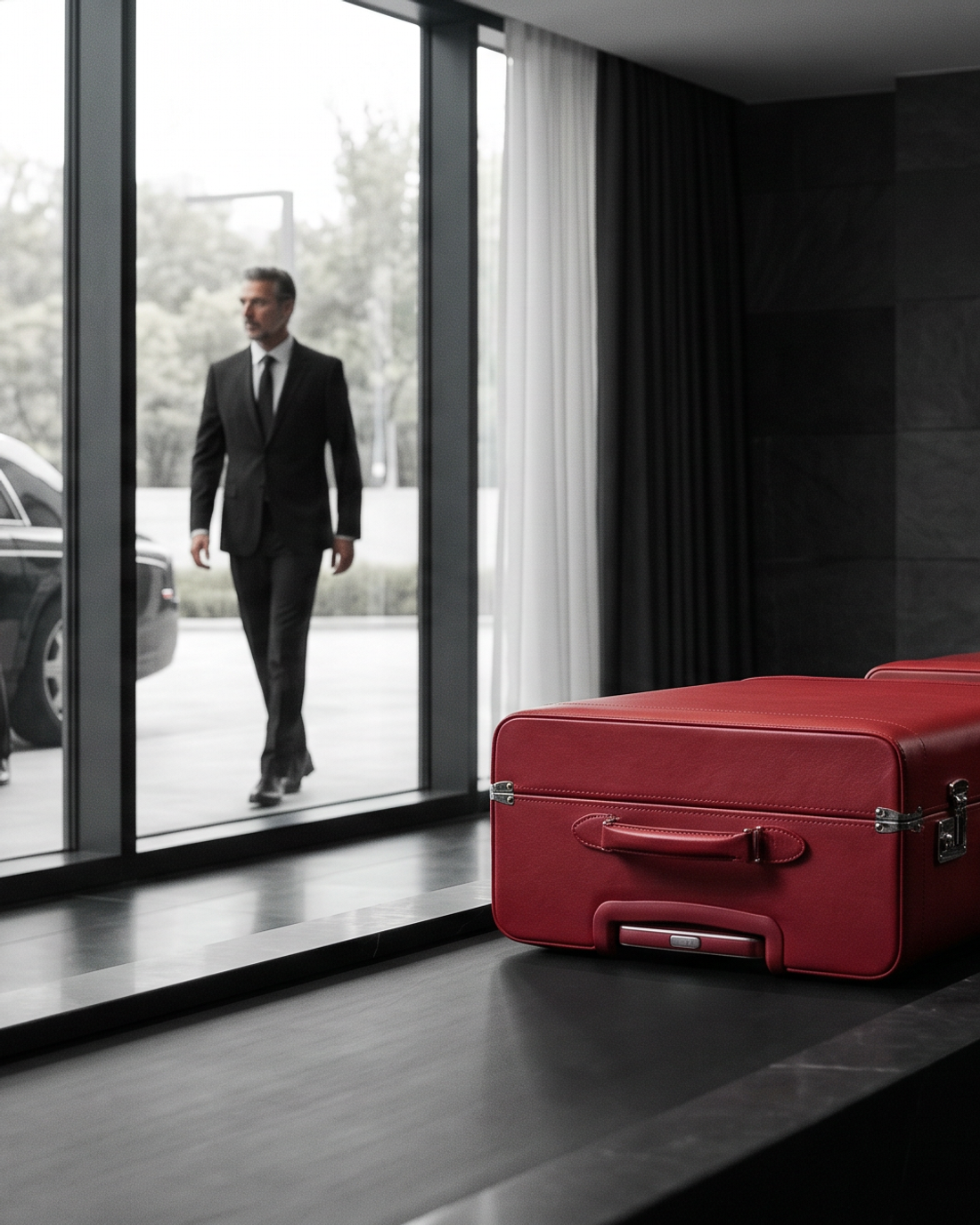
James SamperiSo a really great example of this is... some time ago now, but we worked with Virgin Atlantic, and we were looking at defining their first class experience. Part of that first class experience was you get picked up in a limo, you get taken to a specific drop-off location. And one of the things that was quite sort of challenging about that is that what you want to have done is picked up from your home, sat in a beautiful car, go through to a beautiful lounge, get escorted to your wonderful seat on your flight, and then be able to kind of take off completely seamlessly.
James SamperiThe big thing that was getting in the way was the fact that you had to do all of the operational stuff. So we were one of the first, or Virgin were one of the first sort of brands, to be able to allow you to check in en route in the car, to be able to kind of specify your preferences for your meal, et cetera, in the car. So actually the car ride was a lot more about sort of curating the experience that you're about to have, choosing your dinner options.
James SamperiBut the one that I just love completely is: as you drove into the sort of dedicated drop-off area at Heathrow, the chauffeur would get out of the car, take your bags out of the car, place the bags onto the pavement, and the weighing scales for the bags are built into the pavement, and the ticket is printed by the bollard. So in essence, all of your baggage is already weighed, it's already processed, and before you've got out of the car, your bags have been dealt with.
James SamperiSo that's a really great example of where you've built sort of a beautiful, invisible service, which in effect becomes stunning from the customer's perspective, but you never really see it happen. So elegant choreography is one that we try and sort of ask ourselves: how can we deliver this?
12:2705Subversion: when distrust becomes desire
Read
James SamperiThis is a very emotional thing. So if we understand the emotions that someone has, how can we subvert some of those emotions to create something more positive? So if you take a traditionally negative sort of set of emotions... so think about you as a customer and an insurance company, right? No one will outright say, "Do you know what? I love my insurance company." And a lot of the time it's because the insurance company's motives compete against that of the customer's motives. So in effect, it's not in the interest of the insurance company to pay out.
James SamperiAnd actually sometimes customer claims can be false, and they can try and game that system. So inherently there's often a mistrust. And actually insurance is built not necessarily for supporting people, but for trying to tackle fraud. So actually it's that small percentage of people that the whole service is optimised around. So Lemonade, which is a sort of digital insurance startup, in essence tries to break or subvert the idea of this mistrust between the insurer and the customer.
James SamperiSo what they do is they basically say for any unclaimed premiums within a year, they will not keep that as retained profit, but they will pay that to a charity of your choice. So in essence, you're able to pick your charity. So actually it encourages you not to make false claims, because it's likely to be a charity that you feel quite passionate about. And actually you don't feel like they're going to retain all of the profits.
James SamperiSo they're making a decision based on the merits of each individual claim, because actually they're going to give 40% of any premiums left over from the year to that charity anyway. So you know they're not necessarily in it for more profitability. So they've kind of broken and subverted that emotional, sort of complex emotional relationship. So that idea of subversion is a really powerful one, if you can identify the sort of emotional clashes between the customer and the organisation.
18:4507Data that anticipates
Read
James SamperiWe live in a world where the expectation is that services are increasingly personalised. As we interact with services predominantly through digital means, we know that data is super important to personalised services. But one of the sort of arts of great service design, when it's enabled by digital, is how you can become responsive and pre-emptive to the needs of that person.
James SamperiSo whether that be... there's a supermarket brand within Dubai, and what they're looking at is specific smart stores that are much smaller, much more local, embedded within neighbourhoods. So imagine you're sort of moving from a hypermarket all the way through to this sort of local store. But this local store is so data-driven, it knows exactly what gets bought, exactly when it gets bought, and so therefore the curation of what's available in that store over time becomes more and more tailored to the people who are shopping there.
James SamperiSo in effect it becomes tailored to the community of shoppers, and you get a satellite of stores that can only stock what is necessary, almost in a just-in-time kind of distribution kind of way, but be hyper-personalised to that local shopping community. So that idea of being very responsive, using data to be very pre-emptive in terms of what you're going to stock, when you need to stock it.
James SamperiAnd also, a store like that would be able to understand the seasons. "Hey, no one's buying yoghurts anymore. Like, why stock the yoghurts?" So it starts to present some really interesting ideas. So that last idea of: how can we make this more responsive? How can we use data to make this more pre-emptive? They're all things that we begin to stitch into our conversations and our thinking around how to design surprise, delight and create these stunning experiences.
20:5608Why stunning pays
Read
Mahmoud AbdelrahmanSo why do we have to create stunning moments? Like, okay, they take a lot of money, they take a lot of effort. I mean, you are also obviously taking a lot of risk, right? Because it's not very standardised; sometimes it may succeed, it may fail. What is the business impact? Why do you think businesses need to do more of these?
James SamperiIf you can develop incredible experiences and incredible services, it's not only better for the organisation, it's better for the people using them. And it's sort of mutual benefit that keeps people coming back. So one of the things is, it costs so much to be able to acquire new customers. It's much cheaper to retain people. The way that you retain them is you keep engaging them. You understand not only what their sort of functional needs are, but what their emotional needs are.
James SamperiYou realise that they're a sort of dynamic thing and they change over time. So you need to continually refresh that understanding and sort of challenge the way that you're doing things. And we know that actually satisfied customers, or customers who are very happy with these experiences, spend more, they recommend more. People they recommend to are twice as likely to recommend to someone else, and actually three to four times more likely to stay once they've had a personalised recommendation from someone they know. So we're beginning to get a much more sophisticated understanding of the reasons why, being able to sort of plug that into terms that organisations understand.
23:1509Endless choice, and a happier promise
Read
James SamperiAnd I think the value of doing it is also at a brand level. So I think increasingly, in a world where we have a myriad of choices, whether it be insurance, whether it be what am I going to do with my spare time, with my leisure activity, with schools and kids and whatever else, we have an abundance of choice. So the reason to choose and the reason to stand out from the crowd must be some value or some differentiating aspects that you can provide that others can't. So I think in a world that has increasing choice and competition, it's almost a necessity.
Mahmoud AbdelrahmanWe spoke in the beginning about that: this boils down to relationships. And I borrowed this from Esther Perel, that someone would leave a happy relationship for a happier relationship. And the same can happen. Your happy customer today would leave you for a promise to be happier with another brand. And the same happens for employees. I mean, it's not necessarily that you leave a company because you are unhappy, but basically someone offers you another opportunity where there is a much more desirable self and future that is waiting for you there, and you want to jump on this. So definitely the competition continues to be there.
James SamperiI think thinking in terms of relationship, what kind of relationship do you want with your customers, is a really important one. It's always a really interesting lens to look at your business through, because relationships change over time. They go through different phases. Different things become important at different times. There will be a fundamental sort of baseline that you need, this kind of... One of the things that we talk about is: how do you nurture this idea of nurturing? What does that mean? Nurturing the relationship. But the idea that that relationship is dynamic is a really important thing to recognise. So I think that's a really good analogy.
Mahmoud AbdelrahmanThank you very much, James.
James SamperiThanks for having me.
Episode Shorts
Bite-sized clips from the conversation — the moments worth replaying.



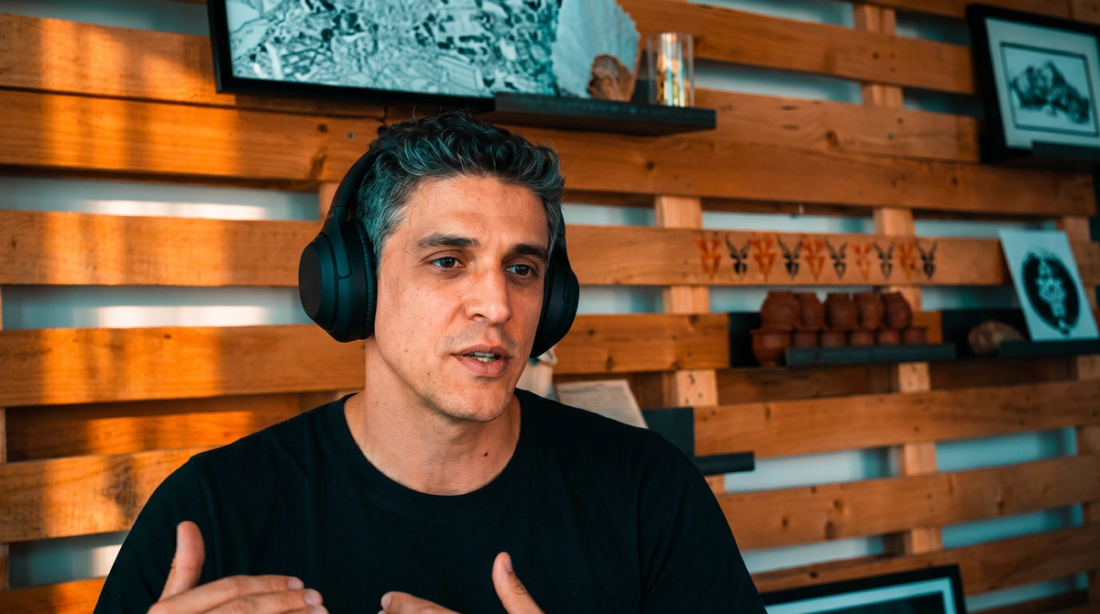
James Samperi
A global award-winning design leader, James is the managing director of Engine’s studio in Dubai, an agency that’s known for having designed 7-star experiences. James has been leading some of Engine’s largest programs in various industries including airlines, automotive and tourism. Having decided to pack their wisdom in a book, James and his fellow co-authors released their magnificent piece “Customer-Driven Transformation: How Being Design-led Helps Companies Get the Right Services to Market “.
On Stunning, and the Beauty You Never See
Beauty in a service is not how it looks — it is how completely it disappears. On stunning experiences, the three things that make a service beautiful, and the art of the invisible.

On the Columbo Moment, and the Playbook With No Script
Great service moments can't be scripted — but they can be named. On codifying the intention instead of the words, and building a culture proud enough to keep inventing its own magic.

On Subversion, and How Distrust Becomes Desire
The most wanted brands don't add delight to a sour relationship — they invert the distrust it was built on. On subversion, and turning the categories people resent into the ones they choose.
On the Brand You Perform, Not the One You Declare
A brand is no longer what you say — it is what you do, audited first by the people who work for you. On the say-do gap, and why the promise breaks at onboarding before any customer sees it.