On What Surprise Rewrites
Surprise isn't an emotion — it's a neurological jolt that bypasses thinking, sears the moment into memory, and magnifies whatever you feel next. On the science of the open second, and why it cuts both ways.

on X-RAYING SURPRISE_
With Michael RousellPhD: teacher, psychologist, Professor Emeritus.
To the episode →An artist drops an album at midnight with no warning and the internet has detonated by morning. A magician turns the card face-up and a room of hardened sceptics gasps in a single breath. Someone you haven't seen in fifteen years says your name across a crowded street, and before you've placed the voice your whole body has already stopped. Three unrelated scenes, one identical instant — the half-second where the world you were expecting fails to arrive and something in you freezes and asks, without asking your permission, “what just happened?”
That half-second is not an emotion. It's a mechanism — and it's the most powerful one a brand or a leader will ever borrow.
The error signal
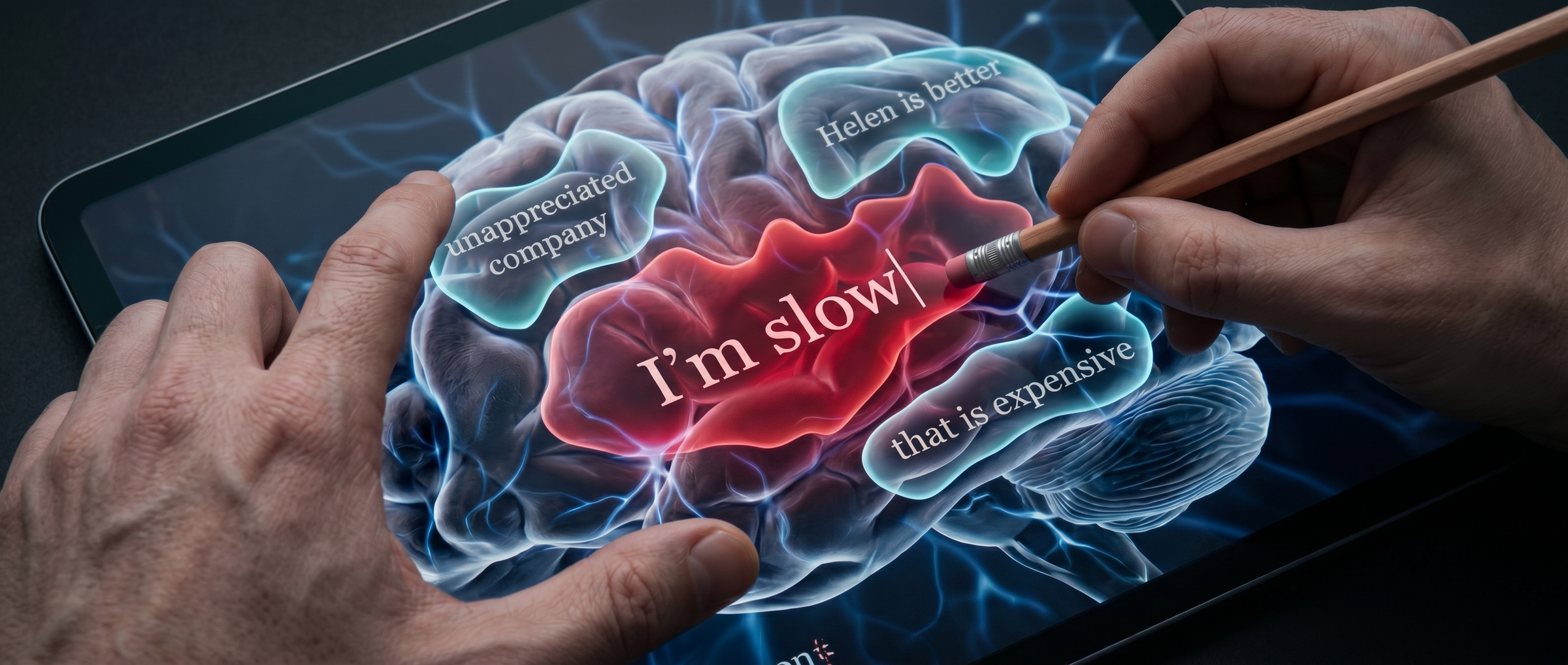
On our show, the psychologist Michael Rousell, who has spent his career studying surprise, makes a claim that sounds wrong until you feel it: surprise is not an emotion at all. It's a neurological error signal. Our ancestors who paused to think when the world broke pattern — was that a tiger in the grass? — tended to perish, so we evolved to register the break and update instantly, bypassing thought entirely. The carrier of that update is a burst of what neuroscientists call phasic dopamine — and dopamine, contrary to the cliché, is not the pleasure chemical but the motivator chemical. The burst doesn't feel good or bad. It flips the brain into a plastic state, suddenly hungry to form a new belief.
Picture it at its most absurd: you're in gridlock, going nowhere, and the car beside you lifts off the asphalt, hovers, and is gone around the corner. Before any joy or fear, there is only the blank, electric what? That is the signal. Surprise is the one moment the brain is forced to drop everything it was doing and rewrite.
The volume knob
Here is the part that should change how you spend it. That dopamine burst is, in Rousell's image, fireworks going off in the head — and the fireworks don't stay neutral. They pour into whatever feeling comes next and make it enormous. Surprise doesn't create an emotion; it magnifies the one that follows.
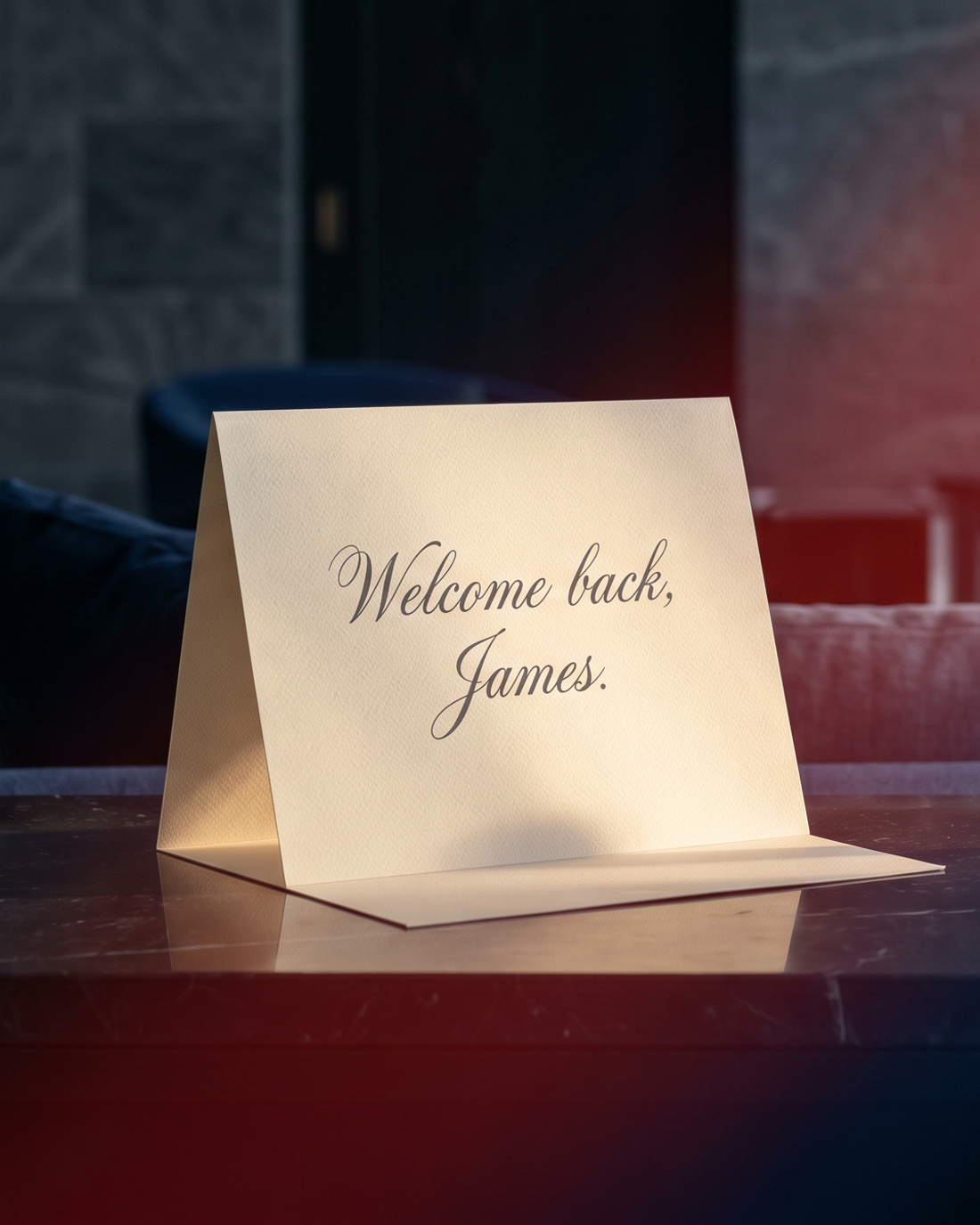
Imagine a company that flies its people and their families to a restaurant, and then, mid-meal, a waiter — a stranger, outside every cue the brain associates with work — sets down a letter that turns out to be a promotion. The joy isn't doubled. It's detonated, precisely because nothing in the room predicted it. Now run it backwards. You walk into the room you spent all week preparing and it's the wrong one, bare and unlit — and because you arrived braced for splendour, you don't feel disappointed. You feel rage. The luxury houses have always understood the upside of this: a Cartier-red box snapping open magnifies whatever the gift already was, which is why the box is built to snap. The reveal multiplies the thing revealed.
So surprise is a volume knob, and it's wired to whatever comes next. It will magnify your failures exactly as faithfully as your gifts.
The flinch
Which is why people brace against being surprised, even pleasantly — and why the person planning the surprise never sees it coming. The giver anticipates warmth and rehearses the lovely reception. The receiver, for an instant, gets only the error: “what's happening — is this good or bad, am I being fired or promoted?” An error signal is a disruption, and as Rousell puts it, nobody likes errors. We adore giving surprises and quietly flinch at receiving them.
That same jolt is what makes the moment stick. The brain bookmarks the break in the pattern and files it as important, which is why your sharpest memories are nearly all surprises — the load-bearing beams of a life are the moments you didn't see coming.
A high-voltage instrument
So treat it like one. None of this makes surprise a garnish to sprinkle over a fine experience. It's a high-voltage instrument: it sears, it magnifies, it refuses to stay neutral, and a brand that surprises carelessly is busy multiplying its own failures into outrage and calling it engagement. The jolt is real and the open window is real. What gets written into that window — a belief, a self, a brand — is the deeper question we take up in the moments that make us; how to decide what gets written there is the art of aiming a surprise. For now, the first discipline is respect: this is the muscle that lets a company surprise on purpose, and the same one — as we argue in the surprise you don't choose — that lets it survive being surprised.
Wire it to your best moment. Never to your weakest.
on X-RAYING SURPRISE_
With Michael RousellPhD: teacher, psychologist, Professor Emeritus.
To the episode →More to Read
Adjacent threads. If this essay landed, these will too.