Seductive and HeroicORGANIZATIONS_
But actually, slowing down is also a really brave thing to do because what it's saying is that not everyone's for me.

The Conversation
Most brands want to be wanted. Few are willing to be refused.
Richard Sedley has spent his career designing customer experiences for banks, retailers and membership bodies, and his working definition of seduction is modest: an emotional connection that goes past use value. Then he complicates it. In his own framework, he tells Mahmoud, seduction and delight come last, after accessibility, after usability, after the product simply not letting you down. A minute later he cautions against his own order. Sometimes people find it easy because it's fun.
What follows is a conversation about subtraction. Slowing the customer down. Making two of your five points and leaving the other three for them. Letting some people hate you, as Marmite did. Seduction, here, is not a trick played on the customer. It is the space left for them to answer.
And then there is Tottenham. Mahmoud suggests fans stay loyal to clubs whose players have pride. Sedley, a Spurs supporter, disagrees. The club can kick you again and again when you're down, and you still get up and go to the match. He calls it irrationally bizarre. It is also the plainest picture in the episode of why people return to what does not reward them.
In this conversation
- A wealth-management app that earned daily logins with one terrible joke a day, and what that says about who the customer wants to be at the office.
- The delivery thug: how the pressure to ship, and the way teams are promoted and rewarded, can destroy delight before anyone gets to design it.
- Slowness as courage: Hipstamatic, Disney queues, and the brands brave enough to say not everyone's for me.
- Why data rounds off the rough edges, and why the rough edges are where desire hides: younger members choosing deep, serious colours, older ones choosing acid neons.
- Esprit de corps over purpose: pride in what you do and loyalty to each other as the engine of an organisation that can seduce.
- A child-sized door, a frog-shaped bin, a pair of white gloves, and a kitchen study for disabled users whose top wish was to make the neighbours jealous.
Wherever you look, there is an unnoticed detail. It asks only that someone slow down long enough to see it.
On Return. A mission is only worth being called back to if it is worth wanting. Richard makes the case for organizations ambitious enough to be seductive and heroic, and brave enough not to be for everyone.
The conversation, chapter by chapter
Every chapter with what was said in it. Open one to read it, or play the episode from that moment.
00:0001Intro
Read
Richard SedleyHaving oomph means that you have enthusiasm, it means you have get up and go, it means that you have some energy about you.
Richard SedleyI think it means using the emotional connection that you can have as a brand with your consumer.
Mahmoud AbdelrahmanI think seduction is a dialogue, it's a conversation. You do something, I do something.
Richard SedleyBrands with a bit of oomph, they go that extra mile.
Mahmoud AbdelrahmanMost brands are engaged in dumping things all at once. It doesn't give you time to process them and at the same time see how you react.
Richard SedleyThere's really only one guaranteed way of getting people to like you, and that's for you to like them.
Richard SedleyI am Richard Sedley and this is Seductive and Heroic Organisations on OOMPH.
01:1002Welcome to OOMPH
Read
Mahmoud AbdelrahmanHave you ever wondered how come some brands dare to do the extraordinary while others fail to catch up, or don't even dare to compete on that level? This is the OOMPH Show, and I'm Mahmoud Abdelrahman, and I'm here to discuss with you how epic experiences are crafted, heroic cultures are built, and how leaders carry desire within their organizations and also in their customer relationships with the brand. And in all of this, we're going to bring in bestselling authors, design experts, luxury leaders, and sometimes I will be having the intimacy of talking to you alone. So if you think the future can be much more desirable, much more glamorous, your brand can be much more seductive; if you think there is much more to life and to work and to business than dry measurements and industrialized processes, this show might be for you.
Mahmoud AbdelrahmanMy guest in this episode is Richard Sedley. Richard is a senior advisor at Deurs, and he's the former chief design officer for the design arm of EY, EY Seren. Richard comes from a long career in designing for brands across the financial industry, telcos and media. And he designed also for quite large luxurious brands and the automotive industry, including Bentley, Rolls-Royce and others. And in this episode, I discuss with Richard seductive organizations: how do we create seductive brands that create some sort of tension with the customers and play on something that's beyond the functional? And we ask, okay, if we want to play on that level, then what do we really need to achieve internally on the culture? What culture does this require, on aspects of pride and loyalty? But really, beyond everything, Richard is someone that always fascinates me with the number of stories he has to tell and the inspiration those bring.
02:5903Painting, horse racing and a word called oomph
Read
Mahmoud AbdelrahmanSo let's start. From a personal point of view, I know that your hobbies are painting, and I know that you often go and watch horse racing, right?
Richard SedleyYeah. Painting, horse racing, art galleries and reading crime novels.
Mahmoud AbdelrahmanYeah. Okay. And I think you did something recently about writing those, right? Writing or reviewing or editing. I remember there was some sort of course or masterclass or something you attended, maybe a couple of years ago, if I remember right.
Richard SedleyI'm not sure that was me. I mean, I'm attending a crime writing, a crime appreciation course.
Mahmoud AbdelrahmanYeah. Okay.
Richard SedleySorry. Crime fiction appreciation, not appreciating crime.
Mahmoud AbdelrahmanAwesome. Okay. And when you hear the word oomph, Richard, and you are a native English speaker, I hope that word wasn't new to you. Some people say, "I don't really use it." How do you define oomph? How does it feel to you? What do you feel when you hear it, when you say it? What is having oomph, lacking oomph?
Richard SedleyHaving oomph means that you have enthusiasm, it means you have get up and go, it means that you have some energy about you that allows you to change the world around you.
Mahmoud AbdelrahmanAwesome. And then lacking oomph is basically...
Richard SedleyIf you lack oomph, then you can be a bit of a drip and a no-mark.
Mahmoud AbdelrahmanHow do you imagine brands that don't have enough oomph in them?
Richard SedleyI would say that the brands that don't have enough oomph are those that are literally focused on delivering the bare necessities in order to be able to potentially please the customer. Brands with a bit of oomph, they go that extra mile. They take what you're doing and they have a pride in what it is that they're delivering. They recognize that it's significant and will make a difference not only to their lives, but also to the lives of the consumer.
05:1804Seduction, outside the romance
Read
Mahmoud AbdelrahmanThat takes us, Richard, into the topic of today, or the first topic, which is seduction and delight. A lot of people, when they hear the word seduction, always think that this is more about interpersonal communication, maybe intimacy, maybe dating, right? Seductive man, seductive woman, seducing someone. But we're actually discussing that in the brand context, the organizational context, right? So how is that possible? What does it actually mean?
Richard SedleyWell, I think there are a lot of similarities between romance and a great brand. I think that if you're going to distill it right the way down to its barest nub of what it means, I think it means using the emotional connection that you can have as a brand with your consumer, your appreciator. Something, as a brand, that uses your ability to connect at more than just the use value level, and takes it to something where there is an emotional connection. That's what I would say would be the key element of seduction. And not every brand needs that.
Richard SedleyI don't know why, but a toilet brush just suddenly flipped into my brain. If you're buying a toilet brush and the people who are selling and manufacturing the toilet brush decide they want to try and get an emotional connection with me, I'm backing off. I'm not having any of that, thank you very much. I don't know why I used that example, it's very weird. But there are certain types of brands, certain types of products, certain types of organizations where your ability to connect with your consumer, with your customer, more than anything relies on that emotional quality. And if you're really talking about that kind of customer engagement, I think it's about the repeated interactions that that consumer might have with you based on that emotional connection. So each time they come back to you, each time they engage with you, they're connecting with you because they have a reason to beyond just simply the use of the object.
Richard SedleyAnd you can see that can be taken advantage of in many ways. If you have an emotional connection with the brand, then the brand is quite likely to recognize you're going to be more loyal to them. You're quite likely to be able to charge above, perhaps, the market value for that particular item. And there's a whole load of other relationships that you can potentially put in place. It's one of the reasons why I think a lot of, particularly, the luxury brands have tried to emphasize that emotional aspect. You only have to watch the cinema or the television to see all of the perfume brands. They don't sell it on what the thing smells like. They sell it on the emotional quality that they're able to offer a connection with their consumers around.
Mahmoud AbdelrahmanWould that mean that engagement means seduction? Is that the case, or are these somehow different?
Richard SedleyWell, I think that the use of emotion and seduction can lead to, in fact often does lead to, greater loyalty and greater engagement. It doesn't have to. There are certain brands, and you see this quite a lot with some of the charities and some of the more right-on brands, where their emotional connection with you is based not even on their products, but on something greater in the world. So that's how they will continue to support those kinds of things. But yeah, I think there's a definite connection between the two.
Mahmoud AbdelrahmanOkay. If we follow the analogy of seduction in interpersonal relationships, is it about giving more, showing more? Is it about holding? What is the tension that you are trying to build, and how does it actually emerge in these organizational contexts?
Richard SedleyRight. Well, I think it's one of those things where you have an ability to connect with your customer. That customer then has the ability to offer you things back. So while it might simply be purely about engagement on one level, it's also about the support that the customer is able to provide the brand, and the brand to provide the customer. Now, that might sound a bit strange, because it's not like the brands are going into people's homes and helping them make the tea or any of those kinds of things, right?
10:0905Who the brand says you are
Read
Richard SedleyBut what they do do is that the brand then offers the consumer a sense of self-identity. It offers them who it is that they are. So if I'm shopping in Britain, I know there's a very different type of person who shops at Tesco's than those who shop at Aldi, than those who shop at Sainsbury's, than those who shop at Harrods. And it might be the same product or a very similar product, but the emotional quality that's invested in it depends very much on how you self-identify and what the brand itself can represent.
Mahmoud AbdelrahmanWe all want to desire. If there is nothing in life for us to desire, life is not worth living. Those that understand this have already cracked the code of breaking free from competition. It is not about doing more. It's about daring to do less, and daring to go overboard where everyone else shies away.
Mahmoud AbdelrahmanSo in a way, there is an element of promising some sort of identity, or a self that is probably, I don't know, better or more engaging than the one that they have today, and that becomes a part of their identity and how they experience themselves, the world, the brand and the community. Is that the case?
Richard SedleyYes, to a degree. I think it's possible to do it the other way around as well. I might be someone who flies Saudia or British Airways or Emirates, let's say a more premium brand, as my normal thing. When I'm taking my family away, I might fly Emirates. But if I'm going over for the weekend to Dublin with a whole load of my friends because it's a stag do, then the idea of flying a relatively luxury brand isn't something that I would do. So I might fly something like Ryanair. But if Ryanair then starts to treat me like a much-valued customer that looks after my luggage, and I get drinks while I'm sitting in my seat, all of these kinds of things, that's actually off brand for Ryanair. Ryanair is all about cheapest, quickest; we don't really care that much about the customer sometimes. So there's an extent to which the brand has to deliver appropriately on that promise.
Richard SedleyNow, the sort of people that I ended up working for tended to be more towards the upper spectrum of brand promise delivery. And as a consequence, we looked at the different ways that a brand could work, almost sometimes collaboratively, with their purchaser, with their consumer, to deliver a more seductive approach and ramp up the level of emotional intensity, so that you can gain greater loyalty and potentially sometimes charge a higher price.
Mahmoud AbdelrahmanSeduction is often about understanding the tension that needs to be built: the conversation, creating the expectancy, the wait, the longing, focusing on what matters, triggering the craving, making every upcoming moment an opportunity. An opportunity for a reveal, a reveal of a part of the self that we weren't aware of and didn't know existed or was possible.
Mahmoud AbdelrahmanYou are discussing delight and seduction, and that's one extra thing for, I don't know, management or customer experience teams or designers to worry about crafting and delivering. What is the business value? Why should they do this to begin with? Is it something everyone should be doing? How does it make them better?
Richard SedleyIt is important to be able to segment your audience, not just on the product level, but also just recognizing that people are different and they will always react differently. And actually, at certain times I can act differently to how I am today. I'm here, I'm on a podcast; tomorrow I'll be going to talk to my son. He's at university and I'm a father. So you can be different people at different times. But I do think that there are usually some particular goals that a brand might have.
14:5106A bad joke, every morning
Read
Richard SedleySo, if it's okay, I'll give you an example of a banking client that I worked for. It was a wealth management company, and we were producing for one of the big universal banks. We were producing an app for those people who were using that wealth management service. And they had a specific goal inside this organization: they wanted to get people used to using the app, and they wanted people using that app every day, basically. And we made it as beautiful a UX as possible. It looked great. It was really easy to use, all of these kinds of things. And in testing, people said, "Yeah, it's great, but I don't really need it every day. Why would I want to do that?" Some people in testing did use it every day, a certain type of people, but others didn't.
Richard SedleySo what we developed was a way in which we were able to get the more reluctant users on it every day. And we did that first off by doing some research and testing. I hope they're not listening to this, because it's not going to be very nice for their consumers. But we tested a whole load of people, we did ethnographic research, and realized that a lot of the people that had this wealth management app were not the most dynamic individuals in their organization. They were quite senior, but they weren't necessarily the life and soul of the party, let's put it that way around. So we brought that knowledge together with a mechanism to get them to go into that app every day. And what we did is we introduced an interstitial screen. Now, for those people who are used to UX in the digital space, interstitial screens are a bit of a pain. They interrupt the user flow. They're the sort of things that you would definitely try and design out of an interaction rather than into an interaction.
Richard SedleyBut we designed it into the interaction, because we made that interstitial screen come up each time you loaded the app, only once a day. And it gave you what we would call a dad joke: basically a terrible joke, a really bad joke. One that, when you tell people about it, they will go, "That's terrible," but they'll also really like it at the same time. They also had the ability to turn that screen off. And each day they got a bad joke, which they could share with the rest of their team. So at the one time you're making them seem more popular, you're making them seem more interesting, perhaps, than they were the day before, but you're also slightly lightening the load of going into the app. What we had realized is that there are certain, I would call them persuasion windows, certain things which mean that people are more disposed to do something. And one of those is if you can get them into a good mood. So what the jokes enabled us to do was to make sure that most of the people, when they entered that app, were in a reasonable mood. We gave them something to make them more popular in the office. And what happened is that they then became known for some of these bad jokes, and they didn't want to let the side down. So they logged in every day to get a new joke, again and again and again. So that's when you've got something which might seemingly be an irritant, or seemingly be totally irrelevant to how they manage their money, but you are saying, "My brand is about helping you be more interesting. It's about helping you be funnier. And it's about the emotional connection that you and I can have together."
Mahmoud AbdelrahmanAnd we all also want to be desired, to be seen, to be recognized and acknowledged. When you touch a human on that level, you become the most important and intimate soul they want to be with. You become the voice that's tied to their feeling of safety and self-worth. The more you can unfold to them what a desirable future and self there is in front of us, the more they want to stay with you on this journey. The opposite is also true.
Mahmoud AbdelrahmanAmazing. And if I try to unpack this example, Richard, I will try to analyze it with you, to also understand what seduction is and help the audience with this. It seems like you were able to do something that's not necessarily directly related to the core value of the app, but something that brought an additional value. It's not something that other competitors would necessarily compete on, but it actually increased the engagement, and the customers wanting to come back for more. But it wasn't really about manipulating. It was actually about making the customers feel more engaging and more fun, and having them more connected to people in their environment. Is that the case?
Richard SedleyYeah, most definitely. I think the way to think about it is that most...
Mahmoud AbdelrahmanAm I right in thinking this?
Richard SedleyYes. I would say most brands, in fact the vast majority of brands, think that they just want to talk to you about that one thing that they're trying to sell or that they're trying to get you to do.
Mahmoud AbdelrahmanOkay.
Richard SedleyAnd what they've got to recognize is that we're all human beings, and we have ups and downs, and we have 360s. Our entire life is much bigger than just that interaction that we have with you as a brand. So if you're able to have a more rounded understanding of who it is that your customer is, you have a better ability to support them through all aspects of their life. Now, I'm trying to be realistic here, because you can't support them through all aspects of their life; you'd be a therapist or something like that. But what you are able to do is say, it's not just about the use value. It's not just about the transactional quality that we have with you. When I say transaction, I don't just mean the exchange of money. I mean you come in to me, you look at it, and then you go away again, in terms of this particular app, right?
Richard SedleyBut you're able to say, "We're much more than that. We can give you something." From a brand's perspective, it's seduction. We can seduce you in a way that someone might do if you met them in a coffee shop. If you just had that transactional relationship, "How was your day?" "It was great." "What are you doing tomorrow?" "I'm not sure what I'm doing tomorrow," that wouldn't work. Whereas you go in and you say, "I really like the top that you're wearing. It's going to be a good day today, isn't it? The sun's nice, you don't have to put this terrible hoodie on." And I guess what I mean by the seduction is that we're giving the brands a slightly more human feel. And that human feel is automatically picked up by the person that you're relating to, the consumer that you're relating to.
22:2907The only guaranteed way to be liked
Read
Richard SedleySomeone once asked me, "How do you get people to like you?" And there's really only one guaranteed way of getting people to like you, and that's for you to like them. Because if you like them, they see in that a level of trust: the fact that you're not going to take advantage of them, the fact that you're much more human and honest. And so they will like you more. Maybe I'm over-egging the pudding on this one, right? But that's what I consider the seduction to be about. We're not trying to trick people. We're trying to offer them a more human element to the brand, which means that they are going to appreciate us more and they're going to trust us more. They're going to stay more loyal to us. They're going to come back and talk to us on a regular basis, and so on and so forth.
Mahmoud AbdelrahmanI think, as you mentioned in the example, it all starts with that element of actually seeing them, listening to them, trying to understand them, trying to understand their context. And this is when you start to uncover all these opportunities. What I find interesting in the example you gave, Richard, is that if you speak to any product manager analyzing the product you just mentioned versus other ones, this wouldn't necessarily be a big part of the offering or the value proposition structure. But it could be something that people aren't able to answer: why do I actually like this? Why do I keep coming back to it? And I feel like this is often the case in seduction. You don't necessarily know, and you can't always name, why this feels better or why you like it. Sometimes it is rational, intellectual, but often not necessarily.
Richard SedleyYou have got to be careful with some of this stuff.
24:2708Six dimensions, and the delivery thug
Read
Richard SedleyWhen I was doing my own consulting, I developed this thing called the dimensions of awesomeness. There were six different dimensions, and the last dimension was seduction and delight. The first dimension was just making sure that you're accessible, it's usable, and the thing doesn't let you down. So for example, one of the reasons why many of the perfumes are able to develop a more emotional approach is because they smell good. If they smell terrible, then it doesn't matter how much you try and use emotion, it's just not going to work, okay? So this isn't an alternative to trying to make your product a good product. It's about taking it to the next level, really extending beyond that.
Richard SedleyAnd what I have seen in the past with a lot of product managers is that sometimes product managers end up as what I would call delivery thugs. And there's always a place for a delivery thug in your product development, okay? Because if you don't ship, it doesn't even work, right? It's as simple as that. But I think that sometimes what happens is that you have all the best intentions and you end up narrowing it down to becoming that delivery thug. And you've sometimes lost track of where the extra gains can exist around that product, the more seductive gains, because you just need to get the damn thing out. So I think there are real reasons why sometimes product managers don't think in that way. It's also potentially one of the reasons why people think you need to develop the usability first, and then you end up, like I said, with that spiral going round, and then you end up with seduction and delight.
Richard SedleyI would just slightly caution on that, because I think that sometimes it can work the other way around. Quite often, people don't find it fun because it's easy; sometimes people find it easy because it's fun. And occasionally, again, you've got to be really, really careful and nuanced about this, right?
26:5109Disney queues and a camera that made you wait
Read
Richard SedleyBut sometimes, if you have a flaw in your product, you can make it valuable. You can make it part of the thing. For example, Disney is the most obvious example. If you ever go to any of the Disneyland parks, you've got to queue to get on all of the rides. But what they do is they provide entertainment around the queuing, so that sometimes it doesn't seem anywhere near as long that you're queuing. So there can be times when the negative aspect can be embraced.
Richard SedleyFor me, a really interesting one, and this has now actually changed a little bit: there's certainly on the iPhone, it might be on the Google phones as well, an app called Hipstamatic, I think it's called. It's a photographic app, and within the phone it recreates one of the old, almost like a Lomo, Eastern European cameras, which can give old-fashioned retro filters and various other bits and pieces. And I think there was something that was a little bit off in the app when it first came out. So what they did was, you'd go, and then these little lights would go, and then a green light would come on, like it was processing it. Okay. And they turned what I suspect was a flaw in the app into something which became a virtue, because what it forced you to do when you were photographing was think about what it is that you were looking at and compose it well, rather than what tends to happen now, and I'm as guilty as everyone on this: you just go, and then choose one of the ones you like, okay? So it's something that slows you down a little bit. And sometimes, in order to be seduced, you have to be slowed down from the fast pace that we're currently in. And so they turned what was a negative into, in my eyes anyway, a positive.
Mahmoud AbdelrahmanAnd I think that element of slowing down and controlling the pace is quite important, because we work in a very fast-paced world and there are a lot of stimuli all the time. And if you are really trying to stand out or get your message across while everybody else is shouting, it becomes really difficult, right?
Richard SedleyNo, undoubtedly. There used to be, I haven't heard it for a while actually, a phrase called wilfing. Have you ever come across that before? Wilfing: "What was I looking for?" Because you start off on something, and before you know it, you've been doom scrolling and you're down some rabbit hole over here, and you think, why was I here? It's like when you get up to the top of the stairs and you forget what it was you went there for. And I think there's sometimes a tendency for us to be caught in such an attention-grabbing environment that, in order to deliver some of that seduction and that value, slowing people down can be the right way to do it. You've got to be careful, though, because if you slow people down when they want to go fast, you're going to be rubbing them up the wrong way. And all of this just comes back to understanding context, the nature of the product, the target audience, target segments within the target audience, all of these kinds of things. Often it's not a cheap thing to do, but it has the ability to lift your brand above others. And to be perfectly honest, pretty much every brand I've ever worked with, apart from in the very early days when we were just digitizing stuff, it's always been about: how do I get competitive advantage? And that competitive advantage is to increase loyalty, to increase our margin gain, all of this kind of stuff. It's always: how do we give that brand advantage? How do we make ourselves more desirable as a brand?
Mahmoud AbdelrahmanYeah. And I think it makes a lot of sense even now, while everybody is focused on efficiency, reduction, et cetera. If you really need to stand out within that, then there has to be that element of tension and engagement and attraction.
31:1210Slow, brave and a bit Marmite
Read
Richard SedleyJust to take slowing down as an example, I think that slowing something down takes guts. The entire world seems to be telling you, you've got to make it faster. It's always going to be faster. Okay. But actually, slowing down is also a really brave thing to do, because what it's saying is that not everyone's for me. There will be people who this isn't appropriate for, because I'm someone who does this in a particular way in order to deliver a particular thing, and that can only be done at the quality that I demand through a particular slow pace. But that's very difficult, because there are lots and lots of brands, companies, that don't want to exclude anyone.
Richard SedleySo it's knowing a target audience, knowing their requirements, and dedicating to it. There's a yeast extract spread in Britain, you can get it in other places as well, called Marmite. And if you taste it, it's really salty. As a kid, I didn't like it at all. My cats, for some reason, love it, right? But they had what I think was one of the best television ads, where they had lovers and haters. They recognized that some people hate their brand and some people love their brand, and so they made a thing about that. And it's now part of the British lexicon: "a bit Marmite." Some people like it, some people don't. That's the way it's referred to. And it's got almost national status now, and it's a flipping thing that you spread on toast. It's amazing how they've done it. They had the guts and the reality, because they could see it in their testing: some people loved it, other people didn't.
Mahmoud AbdelrahmanI think the element of slowing down in seduction, Richard, is very important, because I think seduction is a dialogue. It's a conversation. You do something, I do something. Then I do something back and you do something. It's like ping pong. Most brands are engaged in dumping things all at once. It doesn't give you time to process them and at the same time see how you react.
33:4111Five points, make two
Read
Richard SedleySometimes it's about not doing everything as well. It's about slowing down, but it's also about not doing everything. I was doing, I suppose it was kind of mentoring, for a CEO of a company, actually a while ago, about 10 years ago. And he developed this blog. He came to me and he said, "How do I get this blog to be more popular? How do I get more people to talk to me on the blog, add comments, various other bits and pieces? I've been trying. I spend hours and hours over these blog posts. I look at it from every angle. I do the whole thing. I put it up there." And I didn't even have to do any testing. I said, "Well, you know why people aren't commenting, don't you? It's because you said everything." First thing: it doesn't mean that you're unknowledgeable by not saying everything. Say, "Okay, there are five points I want to make." You have that in your head, but say, "I'm actually only going to make two." And then it gives people the opportunity to say, "There's also this, and there's also that." And that's what you do when you develop a dialogue. Again, if you go to the coffee shop and you sit next to someone and you spend the entire time talking, and you talk about everything, where's the conversation? So you've got to leave space. Timing, space: important.
Mahmoud Abdelrahman100% agree. If we try to complement that lens and look at those brands that aim at being seductive and play on that level, is it something that every organization can do? If we look at the organizational, internal part of it, culture aspects, employees, and that brings us to the next topic: is there a specific type of culture or personality of the organization that you think is needed, or is present, to be able to achieve that level?
Richard SedleyI'm not 100% sure on this, because there are definitely exceptions to what I'm about to say that exist and are doing very well, right? But I do think that the more human the organization is in the way that it's constructed, usually the better able it is to seduce and delight its customers, because I suspect that there's a greater level of empathy within the organization. Now, I'm not talking about being soft on your employees, or any of the stuff that has tended to be represented in this kind of light. But I do think that an organization which promotes intimacy with its customers is one that is more likely to find a way of seducing them, a way of having an emotional connection with them.
36:4512The rough edges data rounds off
Read
Richard SedleySo some of that is testing. I think what's tended to happen in the recent past is that more and more people have relied on data as opposed to testing, and I'm a massive fan of combining the more human form of testing, whether that be ethnographic research or any of these kinds of things, alongside the data. The problem with pure data is that you often end up rounding off the edges of the things that are coming in, because you see the real numbers are sitting in the middle. Apart from the fact that it's always looking over your shoulder because it's data, right? But you do tend to smooth off the rough edges. And actually, often it's the rough edges that are the most interesting ones.
Richard SedleyIf I can, I'll just give you one short example. I was working for a membership organization in the UK, the UK's human resource management institute. This is 15-odd years ago now, I think, maybe longer, and I was still a designer; I was doing hands-on design at the time. I was doing user testing with the participants, to be honest I can't even remember what it was for, and we'd finished. I looked at my watch, and I still had 20 minutes to go. These were the times when I used to have a one-way mirror on the side of the testing room, and I had the client on the other side, and I could just imagine the client on the other side: "He's still got 20 minutes. I'm paying for these 20 minutes. What's he doing?" So I'm thinking, what am I going to do? I've got 20 minutes to fill. How am I going to get something of value out of this? As I said, fortunately, I was still a designer, and I brought out from my bag a set of Pantone colour swatches. Pantones are those printing colour swatches; I used to be involved in print design, so I had those in my bag.
Richard SedleyAnd we just did some very simple colour testing. And this is the only thing I can actually now remember about that entire session, okay: all of those people who were under 26, I think, maybe under 30, went for these really nice, deep, rich colours. And all of those people in the test session who were over 50 went for these acidic neons and bright, bright colours. My initial reaction was that this was exactly the opposite of what I would have imagined. Okay. And then you start thinking, is it because they are children of the 60s and having some kind of acid flashback? I don't know, all of those kinds of things. But actually, you then sit and you talk to them. And this was the most important insight, one that we would never have got if we'd just used data, but it makes perfect sense: all of those people who were under 30, under 26, wanted to be established in the profession. They wanted to be taken seriously. Whereas all of those people who were over 50 didn't want to be thought of as being staid and tired, and wanted to be thought of as still having life in them.
Mahmoud AbdelrahmanFresh and modern and young.
Richard SedleyExactly. Yeah. And so we were able to use that level of understanding and that level of desire, which wasn't just simply "I need such and such a form in order to complete something." We were able to use that desire to make sure that we designed the site, not just the colouring in the site but the whole way the site was designed, to emphasize, for those people who were younger, how to become established, and for those people who were older, making sure they could still be fresh and fruity, let's just say.
Mahmoud AbdelrahmanOur choices often speak for a belief more than they speak for a need. If you understand the belief, you can satisfy the need. If you go on a deeper level, you can build and curate both. It's called meaning.
Mahmoud AbdelrahmanAnd this is an element, and we are not going to discuss design processes, but that's part of the research for seduction. I always tell the team, when they come in with a lot of insights and these very lengthy reports, that researchers seem to be acting out of guilt: everything they learned, they need to make sure that the client gets it, or otherwise they didn't do the job. I'm like, no, don't bombard them with everything, because you have key, really eye-opening things that you really want to stand out, and you want them to remember them and tell them as stories to their friends at the weekend, stuff like that. In a lot of research work that's done, your client already knows some of these insights. They have been in the industry for so long, they have looked at all the complaints, et cetera. The question is: what is the eye-opening insight that you can bring them, where they will be like, "Wow, now this is different"? Like the example you mentioned about the colours, for example.
Richard SedleyYeah, exactly. I think that's where you have the spiky edges, the things that don't quite make sense, that data rounds those corners off. But actually, if you're thinking about it from a seductive and a delight perspective, often it's those edgy things. It's the fact that somebody needs a dad joke to be popular. That's a nugget. We used to call them persuasion nuggets. These are things that you could use that could take you to a slightly different level in the product or the service that you were offering.
42:3713Esprit de corps over purpose
Read
Mahmoud AbdelrahmanYeah, 100%. And that ties into our second topic, Richard, which is more about the culture and the spirit within the organization, and the personality of it, if we really want to perform on that level, and also if we think that this level of meaning could be offered for both customers and employees. And that brings us to what you call esprit de corps. Is that the case?
Richard SedleyEsprit de corps, yeah, it's French. Spirit of the corps. Which basically means to have pride in what you do and a loyalty to each other. So it's a fancy way of saying pride in what you do and loyalty to each other. I was having this discussion all the time in EY, because they were very much emphasizing purpose, purpose being something that's really important. So probably a lot of people are going to go and hire EY now after the episode, maybe. So if you have an organization, and it's a very fashionable thing at the moment, if your organization has a purpose, then that could be the thing that unites everyone together. I actually think, unless you're a charity like Greenpeace or something like that, that's very, very rare. I think it's much more likely that if you're proud of what it is that you deliver and how you deliver it and how you engage, and if you have a degree of loyalty to the people around you, that's what actually provides employee engagement inside an organization.
Richard SedleySo when I was running businesses, in all the bits that I used to run, the esprit de corps, the pride in what you do and the loyalty to each other, was the thing that you would be promoting all the time. And it then becomes a language for how you reference the things that you do, and how you reference the other people around you. It's not as easy as it sounds to cultivate some of these things, because a lot of workplace cultures have the "I'm going to do you down because that brings me up" kind of thing, or the bitching. I know it's not a fashionable thing to talk about, but there is that level of culture, quite often, inside an organization. And more often than not, it's actually driven by the incentives inside an organization. So when you're looking to create a culture that has the potential to be seductive and to have an esprit de corps, understanding how you promote people, understanding how you reward people, all of these kinds of things need to be looked at. Because if you don't, they can absolutely tear apart what is a very nicely working team, even if it's already existing.
45:4614What eats culture
Read
Richard SedleyThere's a very famous marketeer called Peter Drucker, who once said that culture eats strategy for breakfast. I think you can go further than that. To be honest, I think you can say the op model eats both of those. So, the operating model around how you incentivize, how you promote, how you put teams together: if you don't have that in a way that is conducive to giving the space to have seduction and delight, you will destroy it.
Mahmoud AbdelrahmanIf you look at the spectrum, and look at pride, for example, and pride is the P in the word OOMPH for us, it's pride and residence and everything that goes underneath that. You have, on one end, pride as a relationship that could emerge in a team, between an employee and a brand, et cetera, where they actually take pride in identifying with the brand. And then you have, on the other end of the relationship, a level of hate, shame, I don't know, a feeling of disgust or whatever that could be, that at some point ends up having people leave the organizations. I'm not sure if any of the leaders in these organizations intentionally try to cause that; I don't think anyone would want that. But that's something that happens. The question is, what brings us from here to here, or most importantly, from those very negative emotions into that sense of pride?
Richard SedleyI always feel it as being a journey. It's always developing. And then it crumbles a bit, and then it develops, and then the real world impinges, and all sorts of things. But just having it as an ambition, that level of esprit de corps, I think is critical to building an organization that's capable of delivering that seduction and delight.
Mahmoud AbdelrahmanIf it was easy, everyone would have done it, right? I'm sure that there is a price for it. Why do organizations either not want to achieve it or play on that level, or can't? Does it contradict or counter any other things that organizations normally want to achieve?
Richard SedleyAnd then you've got to look at, if you can achieve it, what the benefits are. In my experience, the benefits that come are incredibly rich: stability, loyalty, repeated engagements. Often you find that the customer becomes someone who can become part of your community. I won't labour the point, but I think that there are a number of organizations that I've worked with that have now found that some of the best people to develop ideas for what comes next inside their business are actually their customers. Because, in the way that the Japanese do, they treat every fault and every criticism as a jewel. And that jewel can help to make a great bracelet, necklace, whatever.
Mahmoud AbdelrahmanI think if you take the football analogy, your customer is a fan, right? And they wouldn't be engaging with a club whose players don't have pride in itself and loyalty to one another, because that often leads to miserable and bad performance. But the question is, if the organization doesn't have that sense of pride, where does it come from? How do they actually gain it or build it or instill it?
Richard SedleyI think it can come, and I'm not suggesting this is the best way to do it, from your customers, actually. I've known a number of different organizations that have taken advantage of their customers, and before they realize it, their customers have set up their own self-help communities, which is good, because they've taken over support in many ways. They've created something on the back of something quite dry that the brand was putting forward.
50:0315Kicked, and still at the match
Read
Richard SedleyJust to make things clearer here as well. I'm going to ever so slightly disagree with you about the football fan. As a supporter of Tottenham Hotspur, in many ways it doesn't matter: the level of loyalty that I have to that brand can supersede whether the team they put out on the pitch is rubbish or not, or whether they've got all of these terrible organizations. I mean, it is true that when your team goes down, the crowds go down. I do get that. But there's something just irrationally bizarre about team fans, in certain sports, not every sport, that means they can kick you again and again and again when you're down, and you still get up and go to see the match.
Richard SedleyAnd maybe this is where those two points come together. You see this occasionally with communities around odd things. There was a community that was set up around those little toy horses, brightly coloured toys, I can't remember what they were called now. A male subculture took off of people collecting these strange horses, which were meant for children, but it was grown-up males that were buying these things. And they'd set up a whole community around that. So they were treated like children, but they still ended up developing a subculture around these things. And those are the sorts of things that you need to look out for, because as a brand, that's gold dust for you. You can take that thing and turn it into something new.
Richard SedleyOne of the things that Disney was just unbelievably successful over was that they recognized that lots of, I don't know what you'd call them, seven-year-old girls were starting to see a connection between their female characters, which in business heads didn't exist. So they make millions on Pocahontas and they make millions on whatever the Frozen woman is, all of these kinds of things. But then they developed a separate category called princesses, where all the princesses came together in a separate thing. And that was through the observation of 17-year-old girls being able to pull those things together. And that now outstrips all the other individuals as a category for them to be able to exploit, basically.
52:5416Pride, and the boss who overrides it
Read
Mahmoud AbdelrahmanFrom football clubs to favourite restaurants to countries, we want something to feel proud of, something to trust, and something to feel loyal towards. Yet we spend the majority of our day working. The question is: how do we feel about this relationship, and how do organizations curate for that feeling?
Mahmoud AbdelrahmanI want to push back a bit on that idea of pride. I'm a big fan of it, and it is something that I have always asked about in my career. I always ask, okay, when you say the name of the company you work for, or even the derivatives of that that describe you, what is the physical sensation that you feel? Often, I think the problem is people see the upsides of this, but they are not also ready to deal with the downsides of it. And they are not necessarily always ready to pay the price that is required for those people to always feel that level of empowerment, that they're actually representing the brand, that their word is not going to get overwritten based on an escalation that's happening every day, and then they feel like they have no worth. If they become the representative of the brand, you need to back them, you need to protect them, you need to respect them.
Mahmoud AbdelrahmanI remember in one of the organizations, I was looking into their internal dynamics, and it became a very default action that a team sends an estimation to their internal customer, then the internal customer calls their boss, and then their boss always overrides their estimation. And after a while, they felt like, okay, whatever I say, it's always going to be overwritten, and they don't feel respected. It is difficult to really reach a level of pride if you don't think that this is actually curated for.
Richard SedleyI agree. Yeah, I would say definitely. But we're strange things, human beings, aren't we? We're riddled with contradictions. One of the biggest contradictions in the UK is a pride in our National Health Service, the NHS. I can't tell you the number of times I've been for coffee with various people and they're always moaning: the NHS is this, that and the other, and it's terrible, and the waiting queues. As soon as someone who isn't British sits next to us and starts to have a go at the NHS, we defend it. Okay. So sometimes there's pride, sometimes there's not pride. In fact, it's that ability to feel that you own something, like, theoretically, we own the NHS, that is often one of those things that can help give you that pride. And again, we were always looking for ways, in both services and products, to say: how does someone take ownership of it, so that it's no longer ours, it's yours? And that can be an incredible thing.
Richard SedleyI'm slightly worried here that we're talking about, particularly, the seduction element of it as being something that's quite complicated, that it takes a lot to come up with the right approach and then you're going to organize a team in a particular way. Sometimes it's just about being open to the ideas that some of your teams can come up with.
56:4117Two doors and a frog bin
Read
Richard SedleyI think one of the best examples of a fairly simple but unbelievably engaging piece of seduction was from a company called Imaginarium. They're a toy store; I think they're in the States, they're certainly here, and they're probably in Europe as well. And someone came up with the idea of two doors. The first door is a big normal one that we might go through into a shop. And the second one just sits next to it and is pretty much designed for six-year-olds. It's literally their size; it's only the size for a six-year-old. And that door sucks six-year-olds in. They absolutely get pulled into that shop, right? Because it's designed for them, they understand it's designed for them, so it's where they're going to go. As far as I know, that was an idea the internal teams came up with. And it's just beautiful.
Richard SedleyAnd I actually spent a little bit of time looking at people as they were going past the toy store. And even those people who didn't end up going in, just adults walking past: by the time they'd finished walking past, they had a smile on their face, because the warmth of what that was doing translated to them as well. But again, we've got to be careful here, because it's not always just fun. That is definitely a fun thing. It's not always fun that is important and that will persuade people to do things.
Richard SedleySo, another example: my parents-in-law live in the north of England, well, sort of the Midlands actually, and we used to take our kids up there. Because the kids would get bored with the grandparents after a while, we used to take them out to a local playground. And that local playground had some benches that I'd sit on, and the kids would be all over the climbing frames and the slides and various other things. But it also had two rubbish bins. It had a normal round rubbish bin, and it had another rubbish bin that was designed in the metalwork to look like a frog. It was incredible, a really lovely thing. Okay. And I just sat on the bench and watched people using those rubbish bins. And you know what? Probably only one in ten people used the frog bin. They weren't interested. Because almost everyone else that was walking down the path, which was just a little bit away from the bins, had their rubbish and went and threw it into the bin. So it was the challenge, rather than the fun, which was the engaging aspect of this. There are certain things which trigger different types of behaviour and different types of seduction. Sometimes it can be a challenge, sometimes it can be fun. There are a whole load of other things that you could think about. Again, if you have an expectation, it's more likely to be wrong than right. So that ability to test, to try it out, is always critical to any of those seductive techniques.
1:00:0018Ask your people what they're proud of
Read
Mahmoud AbdelrahmanAnd if you have ever managed to hire the best talent, it makes sense that you don't deprive them of the very same thing that made them that unique and sought after to begin with: their pride, dedication and sense of self.
Mahmoud AbdelrahmanIf someone is listening now and wants to make their organization internally more full of pride and loyalty, and I'm sure there are many more aspects to this in the literature of HR and corporate culture, et cetera, but if we can bring quick highlights. And maybe they are not necessarily a leader; maybe they are assuming the role of a leader and they want to fix part of a department or something like that. What would you advise them to do, based on things you have already done?
Richard SedleyWell, I think there's one thing that I can almost guarantee will come to something, which is: find a way, not just a survey, but find a way of consulting with your workforce. Ask them questions like, "What is it that you feel most proud of about the things that you do? About what we do? Is there anything that you think we do well, but could do much, much better?" You genuinely don't have to come up with these things in a darkened room yourself. The people who are most likely to know what good looks like are the people who are already there. You'll also find out what bad looks like, and maybe you want to fix that. But I can almost guarantee there's one or two things that they're most proud about.
Richard SedleyThere's a coffee shop that I go to, and there's a guy there who is a regular. He's a workman. What he does is he installs gardens on big skyscraper rooftops and things like that. He loves the job in one respect, but he also hates it, because it's windswept and he's got the rain on him and he's snowed on and all these kinds of things. But the thing he's most proud about, when he's gone back to see them, is that the kids love these parks on the skyscrapers. And he sits around and he just watches the kids playing in these parks. And you would never have known that he would do his work to the point of completing it early so that he could knock off, just sit down, eat his sandwiches and see the kids playing. And he says, "I do that two or three times a week, just because it fills my heart with joy." And yet I can almost guarantee that no one who employs him has ever thought that he does that. In fact, they've probably got rules against it, because of the child safety thing now, rather than recognizing this for the joy that it really is.
Mahmoud AbdelrahmanThat element of listening and understanding why they are doing what they are doing.
Richard SedleyYeah. And if you want to make your organization capable of delivering that kind of seduction, you have to make yourself listen. You have to make yourself open to things. Nine times out of ten, nine and a half times out of ten, when you consult with your organization, the thing that they're most proud about will, in some form or other, come back as a complaint. So it's then down to you to find out exactly how that complaint works, what it is that they're most proud about, and find a way of expressing it in a new way. Sometimes it's about giving your teams the language for expressing it. And then you've got the simple ways, like you could incentivize by giving bonuses to things that you think are creative.
Mahmoud AbdelrahmanGoing back to your point, Richard, about maybe also speaking to your customers, you'll be able to identify and elevate those points of pride. There is a famous experiment done by Adam Grant about how, when the team knows the impact of the work they are doing, that enhances the level of performance and also the level of outcome. The experiment included them speaking to people who benefited from a scholarship programme and graduated, and how that impacted their lives. And when they brought those stories back to the people who were actually making calls for donations, the number of calls increased by, I think, 174%, and the amount of donations increased by 147%. So that was a very interesting example that sometimes team members don't necessarily have the sense of pride because they don't see the impact of the work. If you actually curate those stories and that view of impact, that can actually multiply the performance and increase that level of pride.
Richard SedleyNine times out of ten, most organizations don't have much contact with their clients or with their customers. So taking people who are sitting and working in the back room to meet some of their customers, to see the whites of their eyes, can, again, be eye-opening for people.
1:05:3619Jealous neighbours
Read
Richard SedleyWe were employed by a kitchen manufacturer one time to work out what people who were disabled wanted from their kitchen. And we all thought it would be the height of the work surfaces, or, if you're in a wheelchair, making sure that the aisles are wide enough, or that the handles worked for hands that weren't quite right. And they were all really, really important. But you know what came out number one on the wishlist? They wanted to make their neighbours jealous, just like everybody else does. That's the reason why you have that kind of kitchen. And so your expectations are, nine times out of ten, always going to get changed through these kinds of things. For the kitchen manufacturers, it was a complete relief. It was like, "My goodness, we can do something really cool now." And again, it gave them that level of "we can be proud of what it is that we're doing" in a different way, not just being satisfied that we've helped people who are disabled. So always be listening, always look at the odd things that are around. Always very critical.
Mahmoud AbdelrahmanLife is moments, and most of our moments are ones we spend at work. The more we feel fulfilled, acknowledged and manifested, the happier we are. If we don't, there will always be that friction that makes us look elsewhere.
1:07:1220A framer called Reg, and white gloves
Read
Richard SedleyI just remembered another example. I collect art. So I paint, but I also collect lots of art, which means that I'm often getting things that I need to have framed. So I have a regular framer that I go to, and the guy that runs the place was asking me, "How can I improve it? How can it be great?" And I said, "Well, I don't know who does the framing. Wouldn't it be nice if I actually knew who those people were, and I could see they'd washed their hands when they were handling my paper, or whatever it was?" Together we came up with this idea that for each picture that is framed, not just for me but for all of his customers, he's going to have a little printed card that's written by the person who did the framing: "Hi, my name is Reg. I was your framer today. It was a real slog doing yours this time. It was really difficult because I couldn't make sure that the edges were showing, blah, blah, blah. But in the end, I'm really happy with how it turned out. I hope you are," that kind of thing. It's introducing a level of intimacy that could be emotionally rewarding for him, too. And there are things I could write back; it had an email address, so I could send him a note saying, "Thank you so much. The framing is just brilliant."
Mahmoud AbdelrahmanYeah.
Richard SedleyAnd things like that can just change your perception of things. And seduction is often about changing perception. I had a friend of mine who had a photographic website where he was selling lots of limited-edition photographs. And I ordered one for my wife, I think it was for her birthday, actually. And the thing came, and it was in a really proper hard-backed envelope. She opened it up, and the first things that fell out were a pair of white gloves. And I've never seen anything so beautifully change her expectation of what it was that she was going to receive. She took it out with a level of reverence that I just could never have imagined. I knew that I'd delivered her something special; she then suddenly knew she was getting something special. And these white gloves, they're two a penny kind of thing. All it took was that extra little bit of thought to package those in, and it transformed her experience.
Mahmoud AbdelrahmanWork, brand relationships, or even romantic relationships are all vehicles for connection, recognition and acknowledgement. We can make them transactional, and they become functional and empty. Or we can make them nurturing and fulfilling, and they become human.
Mahmoud AbdelrahmanIt automatically uplifts the whole perception of the product and the value, et cetera. I remember an example similar to the one that you shared about the framer: Grovemade and their products. I have some of them here on the desk. One very interesting thing that they do is, if you buy stuff from them, a shelf, a few stationery items, et cetera, they hold them and take a photo, and then they put it with the thing. So when you receive it, you have your actual items held by the team, and that you keep as a memory. It's an online store, but then there is the physical element that you actually receive and feel, that this was special.
1:11:0521A suit, for him
Read
Richard SedleyI've got so many. I'll give you one last example of that.
Mahmoud AbdelrahmanAll right. Yeah, sure. Please.
Richard SedleySo we were working for Tesco's. Tesco's is like Walmart. It's a big supermarket and it has everything: it has food, it has crockery, it has bedding, it does clothes as well, and it had suits then. And if you are thinking of ultimate luxuries, you would not buy your suit from Tesco's. It's not the place. So a little bit of research indicated that it tended to be mothers that were buying it for their 16-, 17-year-old child. Okay, so the kids don't have their own money, but equally the kid's got to have a suit for some interview or something. But it's also feeling a little bit awkward and reluctant; it's not really where they want to be. But knowing that it was the female of the family that tended to do the buying really helped us when we designed the website for them. So we had all the classic pictures of the guy in the suit looking swish and fancy and all the rest of it. And then the information bit on the right-hand side of the image of the suit had two tabs. It just said "For her" and "For him." And it defaulted to the "For her" bit. And it just had all the dimensions and details and quality of the suit and material and everything that you needed in the information. And then when you clicked "For him," the whole thing was blank and it just said, "Makes you look cool." Which was all you needed. And again, it doesn't have to be luxury in this context, but you're still seducing people with the idea of understanding who the audience is, giving them a little bit of fun, and recognizing, from a mum's perspective, he's going to look cool. And from his perspective, it's like, "Yeah, okay, it is for me as well."
Mahmoud AbdelrahmanThat's awesome. Yeah, and weaving that into the entire experience, end to end, making them feel taken into account. It was a lovely conversation with you, Richard. Thanks for your time today. I enjoyed the dialogue, and thanks for sharing your insights and examples.
Richard SedleyIt's my pleasure, and I hope that you and anyone who watches appreciate it. Thank you.
Mahmoud AbdelrahmanThank you. Bye bye.
Richard SedleyBye.
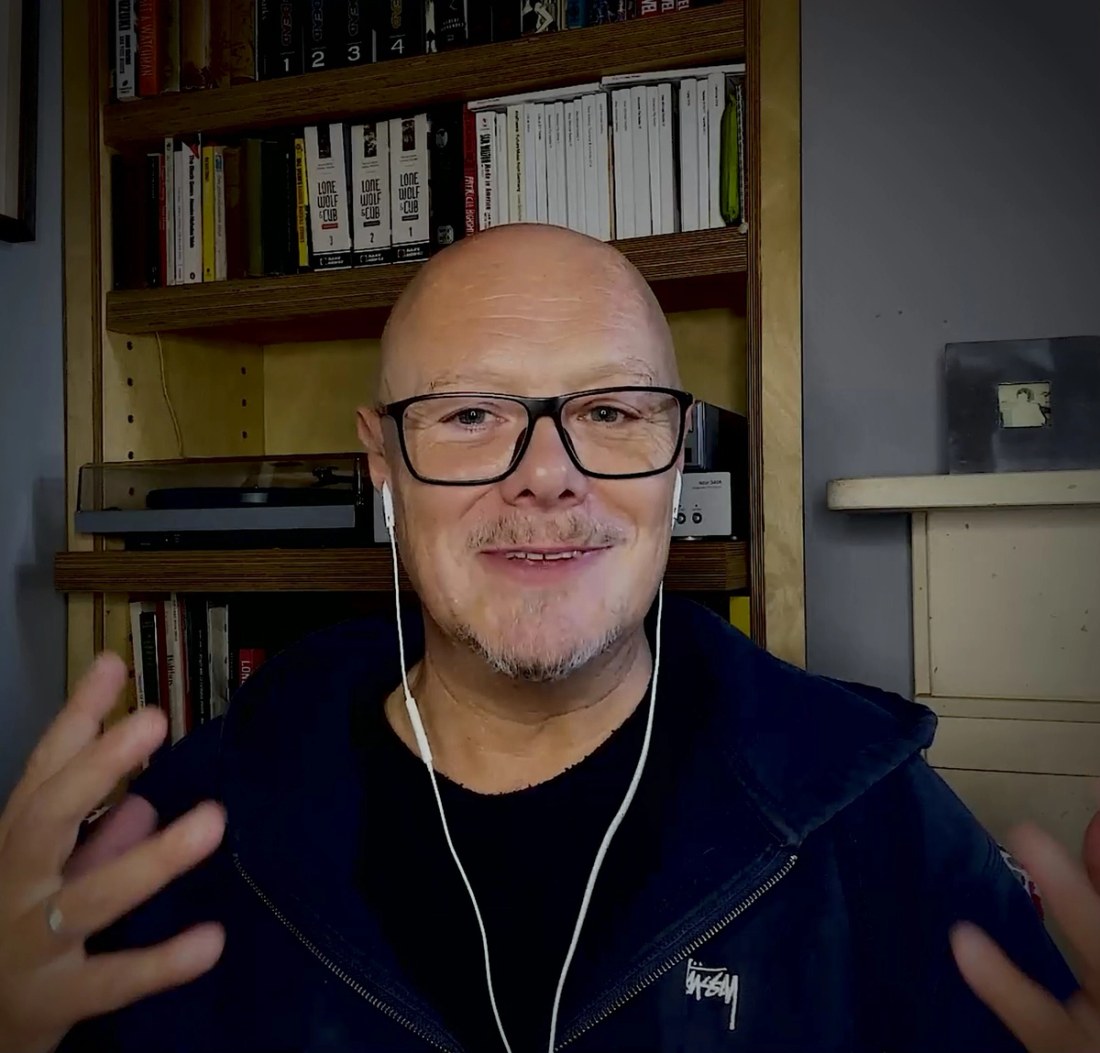
Richard Sedley
Richard Sedley is a London-based customer-experience and design strategist and the former chief design officer of EY Seren. Earlier he directed the Customer Engagement Unit at the digital agency cScape. He and Mahmoud first worked together in Saudi Arabia more than a decade ago.

On Delight, and the Org Chart That Kills It
Why customer delight dies in promotion criteria, incentives and whose word counts, not in the design studio. And why seduction is a question for the COO before it reaches marketing.

On Pride, and Why Your Proudest People Complain
Pride at work rarely sounds like pride. It sounds like a complaint, and the leaders who survey the complaint away lose the thing that held their team together.