On Pride, and Why Your Proudest People Complain
Pride at work rarely sounds like pride. It sounds like a complaint, and the leaders who survey the complaint away lose the thing that held their team together.

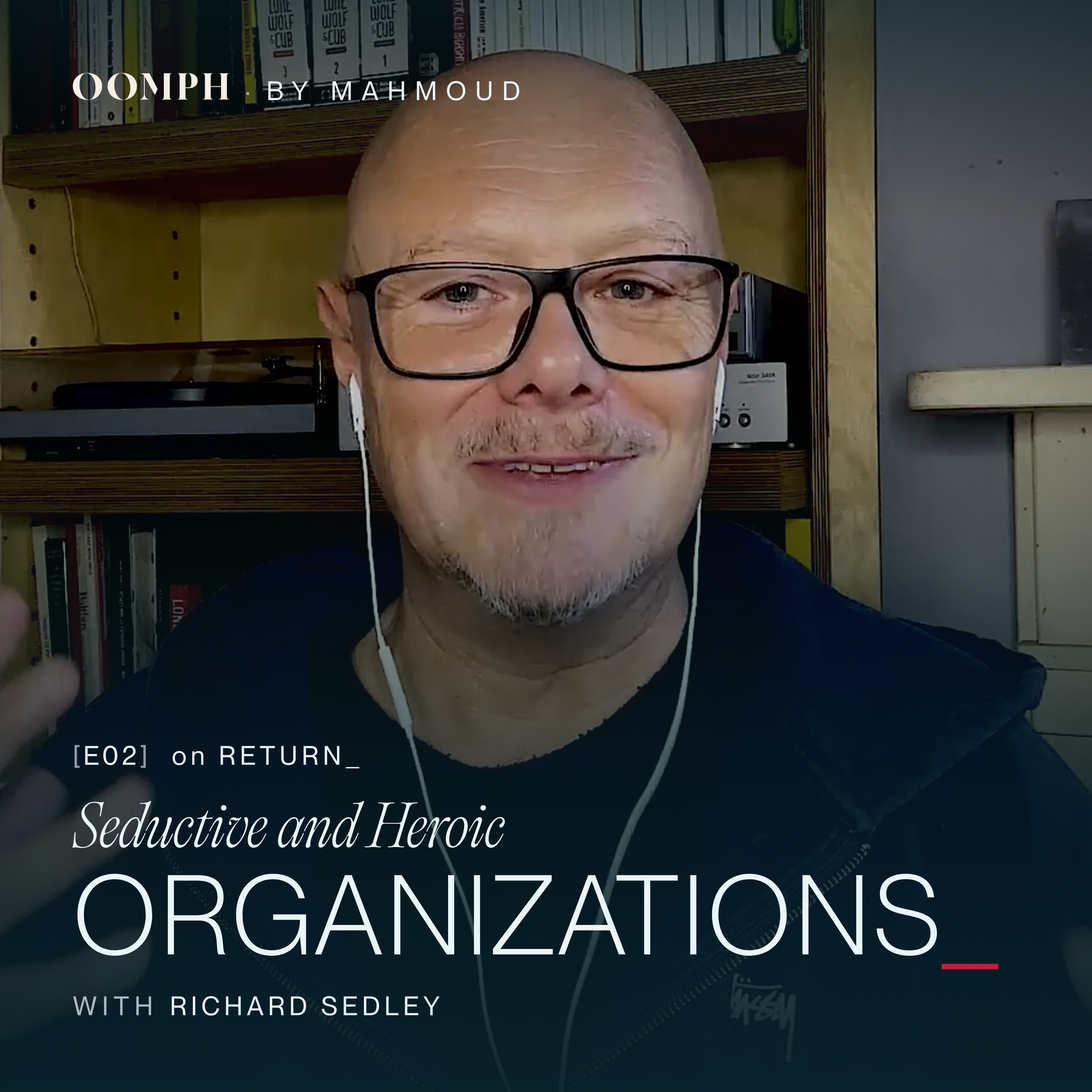
on Seductive and Heroic Organizations_
With Richard SedleyFormer Chief Design Officer, EY Seren
To the episode →A man who builds gardens on the roofs of skyscrapers hates his job. The wind, the rain, the snow — he will tell anyone in his coffee shop how miserable the work is. Then, two or three times a week, he finishes early, sits down with his sandwiches, and watches children play in the parks he built in the sky.
Richard Sedley, former Chief Design Officer at EY Seren, told his story on our show. Nobody who employs the man, Richard reckons, has any idea about the sandwiches. They probably have a rule against them.
Hold both halves of that man in mind, because most organizations can hear only one. They hear the complaint. They file it under disengagement, commission a survey and set out to make it go away — and in doing so they remove the very thing that keeps him on the roof. Here is the idea this piece stands on: pride at work rarely announces itself. It arrives as a complaint, a grumble, a rule quietly bent. The leaders who read complaint as disengagement end up surveying away the pride they were looking for.
The glue nobody writes into the strategy
Purpose is the fashionable answer to what holds a company together. Richard argued against it: outside a charity, he said, a shared purpose that unites everyone is very rare. What actually binds people is plainer and stronger — pride in what they deliver and how they deliver it, and loyalty to the people beside them. The old name for it is esprit de corps. Promoted long enough, it becomes a language: the way a team talks about its own work and about each other.
This piece is about pride, not purpose. Why purpose keeps getting filed in the wrong drawer is its own argument, made in On the Hardest Thing We Call Soft.
Pride is the P in OOMPH, and its line is a double instruction: be proud, and safeguard our pride. The second half is the one organizations forget. There is a simple test of where a company stands. Ask someone to say the name of the company they work for, and ask what they feel — not think, feel — in the body as they say it. A lift in the chest. Nothing. A small flinch. The body answers before the values statement can.
Why pride sounds like a moan
Richard offered a contradiction the British know by heart. Sit with them over coffee and they will moan about the National Health Service: the queues, the waits, the state of it. Let someone who isn't British join in the attack, and the same people defend it on the spot.
It is not a contradiction. The moan and the defence are the same muscle. People complain this hard only about something they feel is theirs — and Richard's point was exactly that: the sense of owning a thing, even in theory, is what makes pride possible. His teams went looking for the moment a service or product stops belonging to the company and starts belonging to the person using it.
Football makes the same case from the stands. Richard, a Tottenham supporter, insisted that a fan's loyalty survives a rubbish team that kicks you again and again. Our counter on the show was that fans will not back a club whose players lack pride in themselves. Both hold. Fans endure losing. They do not endure indifference. The shouting from the terraces is the sound of ownership; the dangerous sound is silence.
So when a leader finally asks a team what it cares about, the answer comes back sideways. What people are most proud of, Richard told us, "in some form or other will come back as a complaint."
The survey that sands it off
A survey is built to average. It turns the rooftop gardener into a low score on working conditions, and an action plan follows to remove the irritant. His afternoons with the children never appear in the data. The rule against them is never examined — or worse, someone reads the report and enforces it. Richard's own advice was pointed: find a way, not just a survey, of consulting with the people who already know what good looks like.
The honest caveat: not every complaint is pride in disguise. Richard named the other kind too — the culture of doing a colleague down to get ahead, usually bred by how people are rewarded and promoted. That is a different machine, and it has its own essay from the same conversation. The craft is in telling the two apart. The pride complaint is about the work and its standard. The corrosive one is about other people.
Hand it back as theirs
The moves are not complicated. They are simply rare.
- Ask what people are most proud of, and what the company does well but could do much better.
- Listen inside each complaint for the thing they refuse to stop caring about.
- Work out how the complaint works — what standard it is defending.
- Give the team the language to say it, and hand the thing back as something they own.
Richard asked his picture framer why he never knew who did the work. Together they settled on a printed card in every finished frame, written by the craftsman: "Hi, my name is Reg. I was your framer today," followed by what was hard about this one and how he felt about the result. A name on the work turns a task into something owned — and gives the customer someone to thank.
Handing it back is how pride gets performed rather than declared — the gap On the Brand You Perform, Not the One You Declare draws between the two. Writing that intention into how a house actually behaves is the territory of On the Columbo Moment, and the Playbook With No Script.
The quiet team
The best people are hired for the very things that made them sought after: their pride, their dedication, their sense of self. To survey the grumble out of them is to deprive them of exactly that.
An organization that silences its complaints does not get a calmer team. It gets a team with nothing left to defend. The rooftop gardener will keep moaning about the rain for as long as the parks are his. The day he stops is the day to worry.
on Seductive and Heroic Organizations_
With Richard SedleyFormer Chief Design Officer, EY Seren
To the episode →More to Read
Adjacent threads. If this essay landed, these will too.