Nobody Comes Back From the Beach a Hero
Why returning to work after a break feels like a sentence instead of a mission — and why the heroism of the return is authored, never handed out.

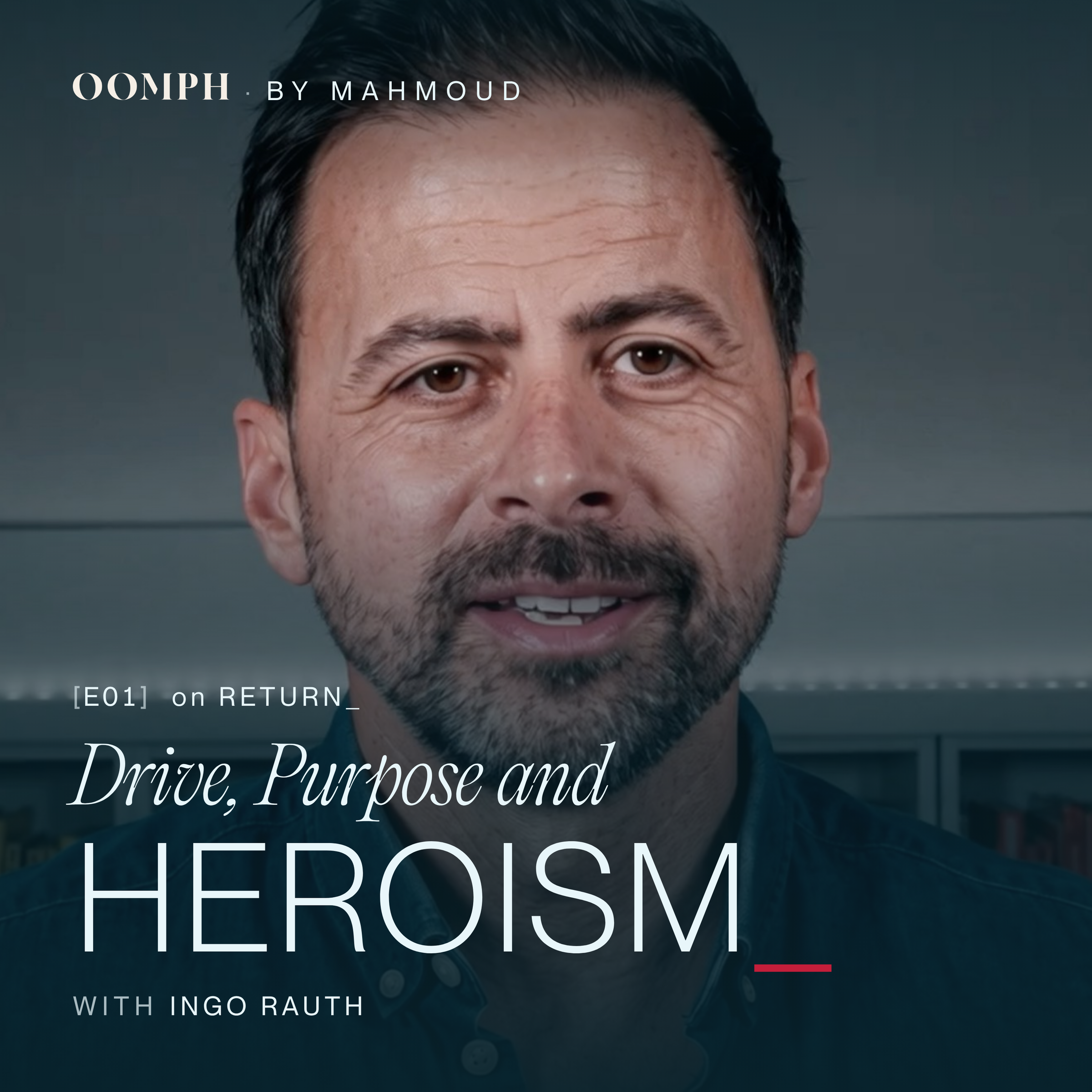
on Drive, Purpose and Heroism_
With Ingo Rauth Ph.D.Educator and Executive Coach
To the episode →Every autumn the beaches empty and the offices fill with people who walk in as if they had been arrested. In the films, the same interruption runs the other way. A man in a beach club takes a call, sets down his glass, and is on a plane before the ice has melted. Same sand, same summons. One comes back a victim. The other comes back a hero.
This is the return to work after a break — the summer holiday, the long leave, the season away — and it is the question our second season, On Return, opens on. Talking with Ingo Rauth, Ph.D., educator and executive coach, our host remembered leaving the latest Mission Impossible with a friend, who put the whole problem in one line: tomorrow, back to the dreaded meetings.
The Agenda and the Mission
Most people do not come back to a mission. They come back to an agenda. A mission is something you go towards. An agenda is something that happens to you.
The difference is not the work. The agent's job is far worse than a strategy call — it is dangerous, sleepless, and frequently fatal. What separates him from the person dragged back to the inbox is where the control sits. Rauth named it precisely: the agent's locus of control is rooted within him. He feels he has it in him to topple a dictator, so the call lands as an invitation, not an order.
The returning employee does the opposite, and does it in the first hour. Meetings, deadlines, decisions already taken in their absence — and, as Rauth put it, with every one of them the person is giving away control. The pen passes to the calendar. Whatever was authored on the beach — the days, the pace, the appetite — is surrendered at the door.
That is why the return stings more than the work. A break is the one stretch of the year when people write their own days. The return reverses the authorship overnight. What gets lost is not rest. It is mojo — life energy that belongs to the person carrying it.
Taking Back the Pen
Rauth told the story of his own re-entry. Back from six months of parental leave, he found a great deal had changed, felt a loss of control, and recognised in himself the posture of a victim of circumstance. The fix was not a mood. It was a sentence structure. He stated what he expected to happen and what he would hold himself to — even though part of the work had not been defined — then named what he would deliver and by when, what feedback he needed back and by when, and asked for agreement.
Nothing about the job changed. The authorship did. What had been assigned became his.
On the show we pushed it further. The agent's mission arrives already clear, already difficult, already a story worth being in. Most returns arrive with none of that — the organisation is navigating, the brief is vague, the challenge is missing. In that vacuum the heroic move is not to wait for a better call.
You didn't give me a challenge. I'll give myself one.
—OOMPH Editors
In practice the reclaimed return has a shape:
- The deliverable is named before anyone assigns it.
- It carries a date, and so does the feedback owed in return.
- Agreement is asked for, not permission.
- Where the work offers no difficulty, one is set.
Rauth's point underneath is the one most people miss: the way work is seen can be changed by the person seeing it. That is where the freedom is.
The Hundredth Return
Agency is the employee's half. The organisation has its own, and mostly leaves it blank.
Companies design the first day with care — the welcome, the kit, the story told at the door. We have argued that onboarding is the first proof of the brand a company performs. But the first day happens once. Returns happen constantly: after every holiday, every leave, every failed launch, every reorganisation. Most companies design the first day and forget the hundredth return — and the hundredth return is where the promise of the first is checked.
A designed return looks less like an inbox and more like the call: what changed while you were away, what is yours now, what is at stake, and what we need you to be brilliant at this quarter. A briefing, not a backlog. It costs almost nothing. It is rarely done, because purpose is still filed as the soft part of the operation.
Some people come back to work that is genuinely bad — badly led, badly built, beneath them. Agency is not a cure for a broken job, and rewriting the brief of a role that is wrong is its own kind of self-deception. Sometimes the heroic return is the exit.
Nobody comes back from the beach a hero. The agent didn't either. He was one before the phone rang — the call only found him ready. The organisations that keep their best people will be the ones whose returns feel like that call. The rest will keep welcoming back hostages every autumn, and keep asking where the mojo went.
on Drive, Purpose and Heroism_
With Ingo Rauth Ph.D.Educator and Executive Coach
To the episode →More to Read
Adjacent threads. If this essay landed, these will too.