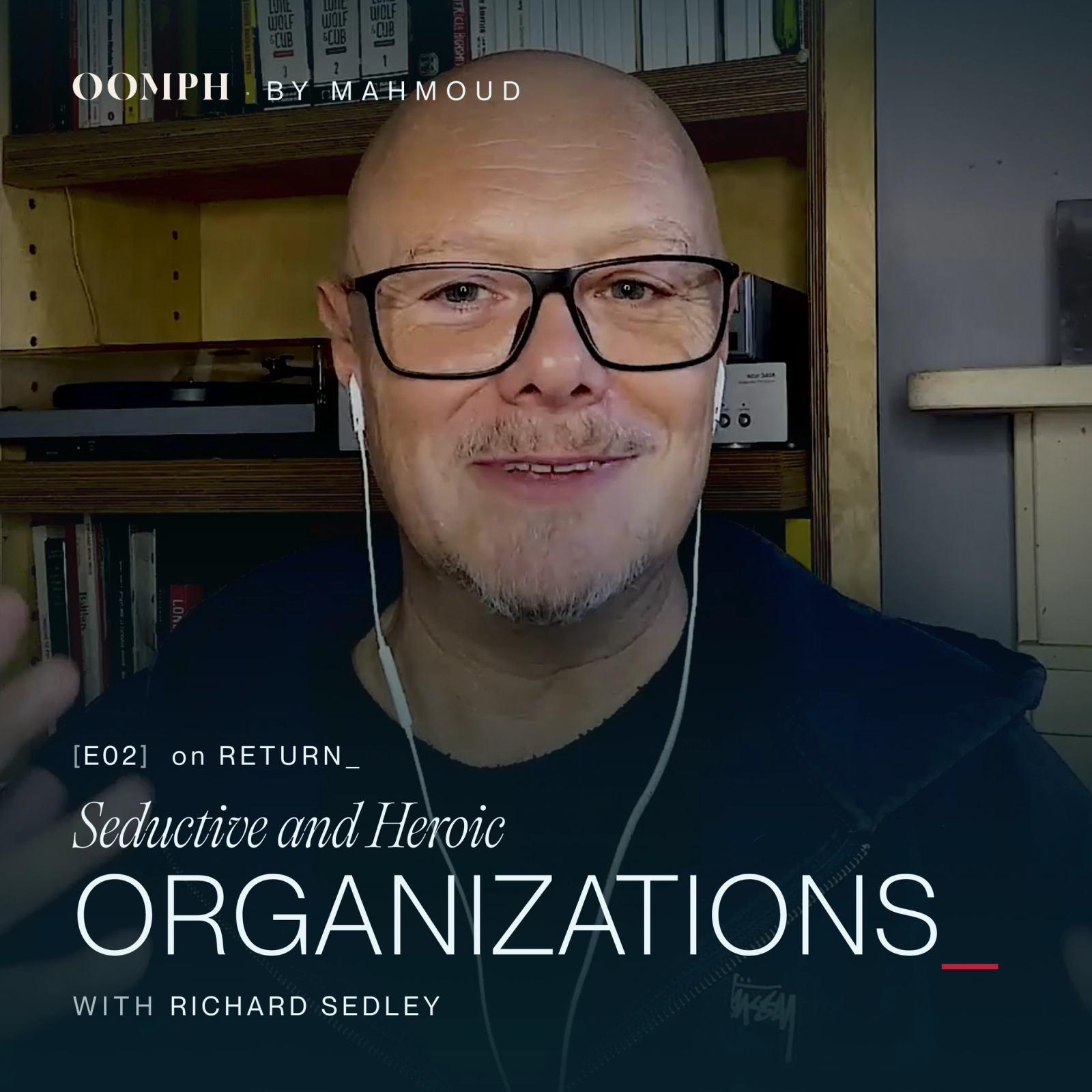
Drive, Purpose andHEROISM_
Like the thing that makes somebody put their life on the line is considered soft, while everything else is considered hard.

The Conversation
Organizations run on energy they do not measure. We built them like machines, with KPIs, check-ins and ladders, and forgot where the power comes from. Ingo Rauth Ph.D. thinks that forgetting has a cost: the harder we control, the more we drain. So you're actually depleting them while expecting to get more out of it.
This is not a conversation about perks or mission statements. It is about drive: where it comes from, what kills it, and what it takes to get it back. It starts with two organizations and ends with a secret agent on a beach, taking the call.
In this conversation
- Two organizations. One runs on control. In the other, people know why they are there. Our parents worked to put food on the table. We expect work to make us someone.
- Nothing soft about it. The thing that makes a person put their life on the line is filed as soft. Ingo turns the word around.
- The turn at midlife. Somewhere in our thirties and forties we stop measuring how far we came and start asking what the time left is for. Most organizations answer with a higher rung. That can take people away from the very work that gave them purpose.
- Purpose cannot be dictated. It can only be found, then linked to the work. Once people have felt it, they want it again.
- The hero's dark side. Every heroic story needs a shadow. A leader who never faces their own is not a hero. And a leader who has disappeared into everyone else's needs may simply be in the wrong role.
- The return. After the summer, some people are dragged back to work and some are called back to a mission. Ingo, back from six months of parental leave, describes how he took back control. He stated what he would deliver, and by when.
Drive rarely comes back on its own. Someone has to decide what the mission is, and Ingo's point is that you are allowed to decide it yourself.
On Return. This is where the season starts: the same summer ending, and the whole difference between the employee dragged back and the agent called to a mission.
The conversation, chapter by chapter
Every chapter with what was said in it. Open one to read it, or play the episode from that moment.
00:0001Introduction
Read
Ingo RauthWork is a way of self-actualizing. Work is a way of developing myself, becoming my best self.
Mahmoud AbdelrahmanWe are counting on our jobs or work to deliver to us much more than jobs have ever delivered.
Ingo RauthForgetting that the energy for this machine doesn't come from steam or electricity or whatever else. It comes from people.
Ingo RauthPut their best foot forward and contribute to this organization, not because you told them, because you want to.
Mahmoud AbdelrahmanThey identify as, or it becomes part of their identity.
Ingo RauthIf you ever experience purpose, it's a feeling that you have.
00:3902Welcome to OOMPH
Read
Ingo RauthHello everyone, I'm Ingo Rauth and welcome to this episode on purpose, drive and heroism on OOMPH by Mahmoud.
Mahmoud AbdelrahmanHave you ever wondered how come some brands dare to do the extraordinary while others fail to catch up or even don't dare to compete on that level? This is the OOMPH show, and I'm Mahmoud Abdelrahman. And I'm here to discuss with you how epic experiences are crafted, heroic cultures are built, and how leaders curate desire within the organizations and also in their customer relationships with the brand.
Mahmoud AbdelrahmanAnd in all of this, we are going to bring in bestselling authors, design experts, luxury leaders, and sometimes I will be having the intimacy of talking to you alone. So if you think the future can be much more desirable, much more glamorous, your brand can be much more seductive. If you think there is much more to life and to work and to business than dry measurements and industrialized processes, this show might be for you.
Mahmoud AbdelrahmanThis episode is Ingo Rauth. Ingo is an educator, consultant, executive coach, and advisor. He has been very profoundly inspiring for me on the aspect of transitions and finding purpose and making that whole picture align all together based on strengths, motivations, and how do we actually prototype and pilot this.
Mahmoud AbdelrahmanBut in this episode, we focus on something that's much more central to the whole conversation. We speak about drive, heroism, and purpose. How some organizations and some leaders tend to be able to more successfully define the purpose and dial into this, and how that shapes the whole organization. And how we are looking at work to give us much more than what it used to give us only as a relationship with an employer that pays us at the end of the month.
02:2203A tale of two organizations
Read
Mahmoud AbdelrahmanSo let's start. And instead of me starting with definitions and stuff like that, I said, why don't we start by telling people, really, what is the difference? If we say a tale of two organizations, two leaders, even two groups of employees in two different organizations, or even the customers. When we speak about purpose, drive and heroism, how would you describe a company that has that versus a company that doesn't?
Ingo RauthI think the easiest way to imagine that is to think back on our parents' generation or grandparents' generation in some sense. So, way back when, post-Second World War, the purpose of the organization was to produce goods so that people would have a better life. People went to work in these organizations, speaking of larger organizations, not to self-actualize. They went there in order to put food on the table and care for their families and make sure they have a safe and secure life. That was the premise. And so by them being the provider, being supportive of everybody else, they had purpose outside the organization.
Ingo RauthGoing forward a couple of decades, where we are right now, we expect to find purpose at work. Work is not just work to make money. Work is a way of self-actualizing. Work is a way of developing myself and becoming my best self and showing to the world that I made it. It's this idea of the American dream, maybe not so enticing anymore, but this idea of going and becoming somebody and showing it to the world, that's very much tied, at least in our generation, to who you are and what you do. Go to any party nowadays and it's all about, so what do you do for work? And chances are, if you don't have a good answer to that, you try to diverge. And if you have a good answer to that, you want everybody to hear it. Because our identities, our roles became so tied into who we are, what we do for work and what we contribute to.
Ingo RauthCompare somebody working for a small company, a local tech company that nobody even heard of, and compare that to somebody that works for one of the big tech companies, for example, OpenAI. If you meet that person, if you hear what they have to say, who do you think you're going to listen to more intensely? Who are you more interested in? And this shows us how important that has become, and the difference in terms of how we perceive people and what they contribute to society and our lives overall.
Mahmoud AbdelrahmanYeah. So in a way we are counting on our jobs or work to deliver to us much more than jobs have ever delivered, right? It is intertwined to how you feel desired, how you feel wanted, valued, etcetera.
Ingo RauthYeah, and how you're perceived. And you also want more opportunity from your work. You want to be able to self-actualize at work.
05:3004When careers became hero stories
Read
Mahmoud AbdelrahmanWhat do you think caused this evolution or transition into that state? You mentioned it was much more about putting food on the table earlier, and that was the purpose outside work. What made that shift?
Ingo RauthSure, some historian will have a great answer to that. My perspective on it is that over the years we came to glorify careers, the way in which people made money and had impact on the world. And we have seen these stories all over. Time magazine, the Person of the Year, for example, is a good one. Or if you look into media in the last 20 years, it was all about these hero entrepreneurs that changed the world, right?
Ingo RauthRight now, if you look at companies, if you look at NVIDIA, for example, who do you see? You see the CEO most of the time as the figurehead. While we know that the organization is much more than just the CEO. He's not making decisions in a vacuum. But we have this idea of the leader being a hero.
Mahmoud AbdelrahmanYeah, he's the brand face and then you think he's the hero, the leader, that's driving the whole thing, and that looks charismatic, heroic, etc.
Mahmoud AbdelrahmanWe are all surrounded by heroes in novels, movies and sports. And it looks whether we are the hero or not. We always want to channel that mission energy somewhere. The question is if you should become one and which one. What is the spark that changes repression into irresistible compulsion? Yes, you heard that right.
Mahmoud AbdelrahmanIf I comment on this quickly, Ingo, I feel like this ties into the idea of glamour, how we see something and then we project that there is a heroic feel in it and we want to be that thing. So these stories that you say we are reading, we are watching, it is all telling us whom we should be or whom we should become, or in one way or another, seducing us into a future version of ourselves.
Ingo RauthYeah, but moreover, it also shows us what's possible, right? If you take, for example, Arnold Schwarzenegger, he, from a rural town in Austria, read this magazine about a bodybuilder making it to Hollywood. And that gave him a vision. That gave him a story, a narrative that he could tell to himself that made him believe this is actually something I can do. I can be the hero of my own story.
07:5405Not a machine
Read
Mahmoud AbdelrahmanAnd from that point of view, what would you say is lacking between two organizations? One that has purpose in it, has that level of drive, where does it come from to begin with? And the one that doesn't have it, what is lacking?
Ingo RauthI think what's lacking is an awareness of what's needed. And what's needed nowadays is not just a focus on efficiency and productivity. If you're an organization that has that without acknowledging that people work for you and those people want to develop, you basically forget about humanity. You basically forget that you're not working with a machine. That metaphor, that idea is outdated, and we know that. But we still treat some organizations like they're machines.
Ingo RauthAnd with that, people falter, they shrink, they become less of what they could be. And you as an organization, you as a leader, despite your best intentions to control, to have KPIs, to have all these external monitoring and reward mechanisms, you get less out of your people because they are not feeling energized. They're not having drive. They're not having something that they want to put their heart and soul in. And they don't have anything that energizes them while they're at work. So you're actually depleting them while expecting to get more out of it.
Ingo RauthIn comparison to an organization that provides a purpose, and we all know that. We have days where we feel like we want to go to work. And we all know how these days differ from those days that we don't want to go to work. Now imagine you can have an organization where most people, most of the time, will feel they know why they're there. They feel energized, they want to get out of the bed, they want to go to work, and they want to put their best foot forward and contribute to this organization, not because you told them, because you want to, because they want to. And that's the fundamental difference. And I think for the longest time we have treated organizations like machines, forgetting that the energy for this machine doesn't come from steam or electricity or whatever else. It comes from people. So why are we forgetting the energy source that drives organizations?
10:0606Leadership can be learned
Read
Mahmoud AbdelrahmanWhat would you say is, I mean, how does this happen? Is this something that the organization or the leader gains at a specific point of time or loses at a specific point of time?
Ingo RauthI think we all have a sense of purpose. I don't think leadership is something that's innate. There might be people that are more prone to be leaders based on some base attributes, but we know that leadership can be learned. And that's why we have universities and institutions trying to support others to become better leaders. I work for an institution like that. We support leaders in becoming better leaders. So I fundamentally believe that can be learned. However, we are socialized in a way that we don't really understand what it means to be a leader, and what it means to make others lead themselves.
Ingo RauthWe all know the idea of command and control. You have KPIs, you check in with your employees, you make sure they achieve a certain goal, you make sure they're doing it the right way. And that all stems from our ideas on how military organizations work. But even those don't work that way anymore. Isn't it more relaxing for you as a leader to know the person you're working for has drive, has purpose, is doing their best work all the time and is motivated, and you are the hero maker rather than trying to be the hero, do it for everyone, everything, all the time? That's super stressful.
Ingo RauthEspecially now that we have organizations that become flatter, where leaders or managers have more responsibility over more people. We need to rely on people's drive, people seeing that they have purpose, and people's willingness to contribute and take responsibility to actually make these organizations that we need happen.
Mahmoud AbdelrahmanYou're the second guest, Ingo, that I see bringing the military as an example that the corporate world is trying to follow in their structure, in their hierarchies and strategies, et cetera. But even if you think about the military, I mean, the military invests heavily in building those elements of investment, pride, loyalty, heroism. They already have a cause. They already have a purpose. They have the strongest purpose that someone thinks they can sacrifice their life for, right? And they invest in that outside the battle, inside the battle, so that everything else becomes about delivering.
12:2107Nothing soft about soft skills
Read
Ingo RauthI totally agree. But I think in the corporate world we forgot about that element, maybe, right? Because it's soft. Isn't that ironic? The thing that makes somebody put their life on the line is considered soft, while everything else is considered hard. And by the way, this idea of soft skills, hard skills came from the military because they wanted to have the machine skills and the human skills. And because the machine skills deal with hard stuff, solids like metal and stuff, they called them hard skills, and the other ones were the soft skills.
Ingo RauthSo there's nothing really soft about soft skills if you really want your people to put maybe not their life on the line, but maybe their career on the line. I mean, they entrust you with their well-being. They entrust you with their future and with their lifetime. And so I think it's important to recognize that.
Mahmoud AbdelrahmanAnd I mean, if you think about it, somehow the organizations are trying to industrialize and mechanize everything in their KPIs, measurements, processes, etc. And that becomes super transactional, right? However, we expect employees to come back and be super engaged and super invested and sacrificing, not distanced, and not withdrawn somehow from the cause or whatever the organization is trying to achieve.
Ingo RauthIt's actually interesting how you talk about the organization, because we tend to personalize the organization. The organization wants, the organization does. But at the end of the day, the organization is nothing without the people. If the people are gone, you don't have an organization. That culture is non-existent, right? And I think that's something that people working for large organizations often forget. They are the ones holding norms and systems in place. And they have the power to change them. Not on a large scale, depending on where you are in your leadership journey, but even in small scales, even how you work with your team, you can foster that. You can create that if you want to.
Ingo RauthBut most of the time it's so much easier, to your point, to rely on KPIs, on measuring. It's this thought that we had through Taylorism during the Industrial Revolution, where it was all about, okay, we can make people more productive if we measure, figure out the best way, and then make everybody adhere to that best way. But maybe that works for production, but I haven't seen it work for knowledge work that well. We can't tell people this is the best way to think. And we also can't tell people, you must feel energized, you must feel motivated. That doesn't work. That needs to come from within. And sure, we can support that. And sure, it's easier to do that through external measures than to sit with somebody and support them in figuring out, okay, what drives them, what motivates them, what is the source of purpose for them, and tap into that.
Ingo RauthBut the problem is that with these external measures, we have to provide them all the time. With helping somebody to figure out what they're about and being intrinsically motivated, we might have to do that once. And if we did it well and support them throughout, through a check-in or whatever else, we can make sure that they bring that energy. And we don't have to create systems outside that make sure they are not falling off the bandwagon, because they are more responsible and at the end of the day also more accountable, because they see themselves in what they do, and therefore what they do becomes part of their self-expression and they don't want to fall off the bandwagon there. They want to put their best foot forward.
Mahmoud AbdelrahmanI mean, it becomes what they identify as, or it becomes part of their identity, and this is how they experience the world as well.
Ingo RauthYeah, you identify, for sure.
16:0308The purpose turn
Read
Mahmoud AbdelrahmanSo if you think about this concept that you are speaking about, Ingo, you call it the purpose turn? Is that the case?
Ingo RauthYeah, so when we look at motivation and drive, there are a couple of things that we can support people with in order to become the heroes of their own story, in order to see themselves enmeshed and feel intrinsically motivated, wanting to get out of bed every day and really make a contribution and see the organization as the realm in which they want to do this. Now, initially, and that is true through all genders, ethnicities, it's about becoming part of society. We want in our first 20 or 30 years of life to show that we're capable, that we can make it right in terms of what other people want.
Ingo RauthBut then something starts to shift. We realize, okay, we showed everybody else that we can make it work. We are successful, right? In our thirties and forties, most of us have leveled up to some extent to be proud of what we have become and what we have achieved. And then what happens is you start to look back and you measure yourself not in terms of how far you came, but in terms of what is left and what you can make out of that time left. And that happens around midlife and mid-career.
Ingo RauthSo this is where a lot of people in organizations try to understand: why am I doing what I'm doing? And they start to get disengaged. A recent Gallup study said that about 60% of managers are partially or completely disengaged, which is a huge number. And the same is true for employees. But also knowing what the ripple effect is of managers or of leaders in an organization, it's actually much more severe. So basically, at that point in time, we are all asked to think about what's our purpose? Why are we doing what we're doing? And that can lead to a crisis, or that can lead to a regained commitment and a feeling of energy and wanting to contribute.
Ingo RauthBut we don't really acknowledge that. We don't really think about that when we think about people, careers, and how they work for organizations. All we think about is that we need to provide a career ladder and allow them to continuously move up the ladder to get more prestige, to get a better title, to get a higher salary, to get more bonuses, whatever it is. And sure, that might work for some people, but by and large, we all have this point where we ask ourselves, why are we doing what we're doing? And so, as an organization, if you want your leaders to be engaged, to be role modeling that drive that you seek from everybody else, you need to support them in maneuvering that turn. That turn when life shifts from performing, making it right for others, to thinking about why am I doing this? And what's my purpose?
18:5409Purpose cannot be dictated
Read
Mahmoud AbdelrahmanWe are speaking about large organizations that have many leaders, some of them may have this realization at different points in time, right? How do they align their own purposes with the organizational purpose? Would one of them bleed his own purpose on the organization somehow and inject that into the staff or different layers?
Ingo RauthSo the good thing about large organizations and even smaller organizations is there are many sources of purpose. I worked with leaders who were excited to support their team, because their team's well-being and their team becoming recognized, and even people growing out of that team and becoming leaders in the organization, was what gave them purpose. So purpose doesn't have to be big, and for most people it's not about saving the world.
Ingo RauthAnd also for organizations it's important to recognize that a person can have more than one purpose. I love my work, I love what I do, but I also love my kids and being there for them. And that's a good thing, right? So I can find energy and purpose in multiple environments and in multiple circumstances. So what we shouldn't do is to dictate a purpose. That never works.
Ingo RauthIf you think about when you experience purpose, chances are it's strongly connected to your sense of identity, because in that moment you felt very confirmed, and to a sense of belonging, because what and how you engage is actually contributing to something bigger than you are. And with that, you feel a sense of transcendence. You feel like you're part of that bigger thing. So you can't prescribe it as an organization. But what you can do is to help people figure out, okay, how do I want to contribute? And when do I get this sense of purpose? And how can I do that in the context of this organization?
20:4410When promotion removes purpose
Read
Ingo RauthAnd luckily for most organizations, when it comes to leadership, there are plenty of people who want to get into a leadership position. So there are some people that might be served by becoming a leader, but others who you're not helping to become more motivated, more driven, more heroic if you make them a leader. What you do is you remove them from their purpose. And so that's another thing I think that we have to be aware of, that with more prestige, more responsibility, comes a different kind of job. And that different kind of job, namely the leadership role, is not always the thing that makes people feel motivated, driven, heroic, or purposeful. You might in fact incentivize the opposite of that.
Ingo RauthSo it's important for an organization to recognize, ideally early on, and help their people recognize, what are the things that drive me, what are the things that are purposeful to me, and help them find their way in the organization, because they could use the organization as a way to self-actualize. And if you have employees do that, you will provide them with a fuel of motivation, of drive, or a source of motivation and drive that will last for a long time. So it's our responsibility to support people in that. We can't do it for them.
Ingo RauthAnd a second thing that I want to say on purpose: if you ever experience purpose, it's a feeling that you have. And once again, we're talking about soft things, but this feeling is so intensely energizing and motivating that people want to have it all the time. And so by providing somebody with that experience, you actually allow them to tap into that and link that to your environment. And here we're back at the military, right? So people go on missions, extremely dangerous, they put their life on the line, but they also do it because of what they feel going through this. There's an adrenaline rush, there is probably pride and a feeling of celebration when they come home, maybe a sense of release, relief. So it's always also an emotional journey.
Ingo RauthAnd I think this is something that we largely forgot when we think about organizations and the experience that people have in organizations. It's not just about the role. It's not just about what you do. It's also how you experience what you do.
Mahmoud AbdelrahmanAnd how you experience yourself and how you experience others.
23:0411The hero's dark side
Read
Mahmoud AbdelrahmanI think all strategies make sense on paper. They are rooted in intellectual thinking and they all sound good. I think that's one part of the problem, that most of the time people or organizations or leaders or systems or strategies expect people to be always dialing in their good self and the good side of things, and they forget that there is a darker side that everyone has, or something that they feel they shouldn't talk about or shouldn't be expressed, or shouldn't be brought into how we operate, since everything is starting to be or wanting to be standardized. And then that could translate, I feel, into some sort of emotional repression. I mean, you are trying to be something that the organization wants you to be, but that's not necessarily you. Is that the case?
Ingo RauthRight. And I think this is where we are also bordering on heroism. If you think about any heroic story, the hero always has to engage with the dark side. There's always a dark side. We all have it. In positive psychology, we think of weaknesses as being a strength in the wrong circumstance. So if you think of yourself having a dark side or something that's not welcome, and you don't act on it, you don't confront it, you don't engage with it, you're not a hero in my book. If you want to be the hero of your life, it's not only to conquer the world or be the best leader that you can be, but it's also up to you to stand up to your own inner demons and the things that you carry with you, and engage with them as purposefully and as intentionally as with the world out there.
Ingo RauthBecause the world out there at the end of the day is the result of your inner processing. It's how you understand and make sense of the world. And if that's not aligned with the world, if that's not something that works for you, you won't get to drive, you won't get to purpose. It will be very challenging. So the best thing that a leader can do, that we can do, is to harmonize those two, and to find ourselves in those circumstances where we can contribute our full self and feel like we belong and support something bigger than ourselves, despite the things that we might carry, despite the shadows or the dark sides that we might have.
Ingo RauthAnd I think that it's maybe part of that glorified idea of a hero, that heroes are without flaw. But if you think of any movie, we love heroes because they have flaws. And we find ourselves as part of their story. We see how the underdog develops into the king or the tycoon or whatever. And we love that because we know we can relate. We all have these things inside us, and they make us more human, more relatable. And also, if you think about who do you want to work for? You don't want to work for the perfect person or the perfect hero, because it will always make you feel less significant.
Mahmoud AbdelrahmanThere is an element of evening out all the edges, that it doesn't start to have any personality of itself at all. It becomes very copyable, it starts to be like everybody else.
Ingo RauthYeah. And I think as a hero or as a leader, it's also important that you engage in those little challenges, that everyday challenge, right? So let's say, for example, for me, I'm triggered when somebody is too surface level and I can sense they don't know what they're talking about, and they just try to push it aside and it's not done in the right way. And so I know that gets me irritated. But it's not always right to be irritated by that and engage in that. Sometimes, depending on the situation we're in, I need to let that go.
Ingo RauthAnd I think for me, part of life is to understand that, understand yourself, and develop a self manual, if you like, that allows you to navigate these circumstances in a way that contributes to the bigger whole. Not just you, your ego and what you want. Because at the end of the day, the hero's journey is not just about the hero, it's about what the hero does for everybody else that makes the hero the hero.
Mahmoud AbdelrahmanMost companies become the most daring and grand when they want to claim a purpose. The question is being able to realize how you will be tested on this every single day. Organizations are often ready to take the upside of it, but are far less prepared to work with the most heroic team members and what they will expect and demand.
27:4212The leader who disappears
Read
Mahmoud AbdelrahmanTrue, but can I bring a different angle on this? Because I think we have always been speaking about empathy and we're speaking about servant leadership, and we don't often speak about how wrong this can go. I think if we need the leaders to bring themselves to the purpose, their self needs to continue to exist and needs to continue to be recognized, and not push it too much to the back, that they reach a level of loss of self, or feeling that they are here for everybody else, but they lose that connection with themselves.
Mahmoud AbdelrahmanI have seen that often happening, especially, for example, in the design field and other fields. And I remember being in a network of design leaders at some point, and that was a common problem. They feel like they are here for the team. Everybody has the right to feel represented, to feel expressed, etcetera, but they are the ones that are supposed to hold space for everyone, but they are not sure if they exist anymore.
Ingo RauthWell, my question then would be, are you in the right role? Right? So for me, in order to have purpose, you need to do something that contributes to the whole, which these leaders clearly do, in a way that also confirms you and that's valuable to you. Now, if you don't feel like what you do is confirming you, my question is, are you in the right role? Is that an environment in which you want to be? Or is there an environment that you would rather be in? Because there are plenty of people out there who love to make others the heroes. And we need those too.
Ingo RauthIf you want to be a hero, and especially in the design business, many people grow up from being a designer to then becoming a leader. And that usually happens later in your career. But is that purposeful for these individuals? Or are they expecting something that they want to get out of this role that they're not getting? And if that's the case, the question is, are you in the right place? Is this the place where you can contribute the most in a way that's in line with who you are and your strengths, that you feel recognized, while at the same time contributing to the bigger unfolding?
Ingo RauthAnd it seems like this equation is not true in that circumstance, in that example. And I agree, there need to be different kinds of leaders. But a leader needs to serve the environment they are in. If you take a leadership position and you're not serving the bigger thing, you shouldn't be a leader in that circumstance. You should either find a different circumstance or a different role in which you can engage.
Mahmoud AbdelrahmanYeah, but do you think they need to continue to be present? As much as they are hearing everyone else, their voice should also be heard within themselves before the rest. Because what I have often noticed is that people actually start to lose connection to their own needs. I remember someone telling me, I can't even take the smallest decisions, because I feel like it always has to cater for everybody else. And that element of, I don't know, you yourself start to turn into a committee.
Mahmoud AbdelrahmanI remember my advice to them was, start to make the smallest decisions, even if they don't matter. I mean, if you are ordering food, make sure you say which topping you want, even if it doesn't really matter to you. Because, I mean, as you get older as a leader, sometimes you want to make sure, okay, whatever everybody else wants, I'm fine. A topping of pizza doesn't really matter to me.
Ingo RauthSo my question would be, are you a leader if you're incapable of leading yourself in the best way? And the reason why I'm saying this is not to judge anybody else. I have this problem. For the longest time, I felt safer and better in serving others and putting myself last, which made me miserable. It made me miserable in my job, in my relationships, in my romantic relationship, with my kids. And that's not serving anyone. So as a leader you have to take responsibility. And so that doesn't stop just in the context of the organization.
31:4013Leadership is given, not assumed
Read
Mahmoud AbdelrahmanI don't know, Ingo. I have to say that, honestly, some people that continue to push these voices sometimes are more authors and journalists that haven't been known to lead any organizations. They just write books, become bestselling authors, and tell you that you need to sacrifice even more, while they themselves have been just strong personal brands, centering the world around their voices, their books, their appearances, and haven't really been seen giving the stage to anybody else.
Mahmoud AbdelrahmanI mean, excuse me, but this is the reality, right? I mean, many of the top authors in leadership, and I don't want to name anyone, aren't actually leaders. They are speakers that you would pay, I don't know, tens of thousands to bring in to speak at your event, and they are not known to have led anything or have done any success.
Ingo RauthI don't agree, because if you invite them, if they speak in front of thousands of people and you agree with their message, and you want people to tap into that, they're in fact leading. Leadership is something that's given, it's not assumed. As soon as people follow somebody else, they make that person a leader. They give that person power, right? But I agree to your point.
Mahmoud AbdelrahmanBut there are leaders in a different category. From that point of view, an actor is a leader.
Ingo RauthThe other thing is that, especially when you think about leadership books, usually they take out one element that they feel is missing inside the organization and portray it as something that can fundamentally change the organization, right? Without necessarily talking about all the downsides and overdoing something. And I think it's up to the people who receive the message to say, what is really needed here? What kind of organization are we?
Ingo RauthDoes every organization out there need to support their leaders in talking about and finding their purpose? Probably not. Are there people that will benefit from it and will give you their 120% if you give that kind of support? Absolutely. So as a leader in an organization, I need to understand what the situation needs, and how I can bring myself to, or involve others in, best supporting the situation so it unfolds in a way that serves the organization and everybody involved. And so, yes, I agree that there are people out there that have never led anybody in their life and talk about leadership.
Mahmoud AbdelrahmanWell, I mean, without naming someone, one of them was saying, if your son didn't do well in school, do you just disown him? That's the same way: if a team member didn't perform well, you don't just fire them. And yeah, I think that analogy doesn't work at all.
Ingo RauthBut the thing is, if you look at the world right now, right, there are so many cultures, so many organizations, that there is an organization, I wholeheartedly believe, although I wouldn't want to work for it, where this holds true and works. Right?
34:4714When your values don't fit
Read
Ingo RauthAnd what we have to recognize is that we all bring our own set of values and ideas to an organization. And the best service you can do yourself and the organization is to make sure that those values are aligned. Because if they're not, you will constantly feel like you're fighting against the organization. You will feel like you have to wear a mask. You will feel like you're constantly judged or looked upon. And so that requires us to understand, okay, what do we value? How do we want to be treated? And then find the circumstance in which we're treated in the right way and contribute in a way that matters to us.
Ingo RauthAnd yes, you can blame your organization, you can blame the culture of the organization. I once coached somebody in a leadership capacity in a tobacco company, and that person wasn't happy at all. It didn't align with his values, but he still felt like he needed to stick around, because he needed the money, kind of thing, right? And at least he had purpose, because he was serving something that was larger than himself, not inside the company, but outside the company. But the thing itself conflicted with his values and made him feel miserable.
Ingo RauthAnd so having that clarity, knowing what your values are, and knowing therefore how you want to self-actualize, as a leader, as somebody employed in an organization, as a freelancer, it doesn't really matter. But that's important. In fact, freelancers are a great example, because a lot of freelancers, if you talk to them, they love freedom. They love self-actualization, they love autonomy. That's part of why they take this job that doesn't just allow them to do what they want to do, but requires a whole lot from them, in terms of billing and invoicing, taxes, and all these things that nobody really likes. But they do it because the nature of the work is more aligned with who they are. And they feel more fulfilled when they do it.
36:3915The return: the agent and the employee
Read
Mahmoud AbdelrahmanWe are now probably in the autumn season and we have just finished the summer. And as we were wrapping up the summer, I've been thinking about this idea of the return. So people finish their vacations, beloved times with their families, friends, etc., very festive on beaches, etc. And they go back to work, feeling that they are dragged into office environments, if they are not engaged, if they don't feel that there is a purpose.
Mahmoud AbdelrahmanAnd I want to bring in the contrasting picture. You always have in movies this private or secret service agent who's in a beach club, and then he receives a call for a new mission, and then he's immediately getting ready, flying and preparing, I don't know, weapons, etc., etc. On one hand, one of them feels a victim, pulled back into something, and one feels super heroic, and he's all ready for it. And this is the beginning of the movies, right? And I remember last time I was watching the latest Mission: Impossible with a friend, and after we left, I was like, okay, and tomorrow you go back and attend your dreaded meetings.
Mahmoud AbdelrahmanSo the question is, how do you think people can do this shift? How can they assume that level of being in control, in command, that level of excitement, heroism, feeling that they are actually much more looking forward to doing something and feeling inspired to actually do it? So that their return is actually like a new mission that they are all thrilled about.
Ingo RauthI love that. Especially, I think you already gave part of it away. It's this idea of control, right? In one sense the secret agent feels like they're in control. They're going to steer the narrative, they're going to do what they need to do in order to accomplish their goals. And they're very probably motivated about the goal because it's purposeful. We're going to save the nation, or we're going to topple a dictator, or something like that. Now that's hard to see sometimes when you go back to work. And you might think of, now we have this strategy call, or we have this shift, or we've got to ramp up for the busy season, or whatever it is.
Ingo RauthAnd the interesting thing is what you do mentally. The secret agent puts themselves above the situation. Their locus of control, their sense of control is rooted within them. They feel like, yeah, I have it in me to topple a dictator. Wow. Right? But when you go back to the organization, you might have the complete opposite. You might feel like, my God, now I have these meetings and deadlines and stuff I can't do anything about. So you're giving away control. And you might give away control in a way that's not aligned with you at all. Right? So you might feel like, yeah, I have to say yes to this person, even though I don't agree with them.
Ingo RauthAnd so the question that we have to ask ourselves is how we can assume, especially as leaders, a sense of control. And by the way, we all are leaders. I hope that became clear. We have to lead ourselves first in order to be able to lead others. And here, I think what's important is to be authentic and in line with who you are. Because if you do that, and you shift your environment and you influence your environment based on that, you actually feel like you're getting a sense of control and ownership, even though the environment corresponds to you in a way because they want to, not because you necessarily influence them.
40:0316Back from parental leave
Read
Ingo RauthBut coming back to what I would do if I had to go back, actually, good point. So let me tell you one thing that I just did coming back to work. So I was on parental leave for six months. And I really enjoyed the time with my son. And I kind of dreaded putting him into daycare, and I really didn't feel good about that. But I felt I also needed to go back into my job and support the organization that I work for. And so coming back, I realized that a lot of things changed. And I felt a lack of control. And I didn't know, okay, where am I taking this? Where are we going?
Ingo RauthAnd one of the things that I realized by speaking to other people was that I was not assuming responsibility and accountability. So I'm fortunate, because I get to work in what I enjoy doing. But when you feel disconnected and you feel a victim of the circumstance, that's where for me I start to lose out and feel depleted and feel low on energy and feel like I'm lacking drive. So for me, it was important to actually state what I wanted to happen, what I expected, what I want to hold myself accountable for and want to deliver at the end of the day, even though part of that work wasn't defined.
Ingo RauthBut the conversation went like, okay, we are heading in this direction. This is what we want to accomplish. And based on that, I think the next step would be X, Y, and Z. Do you agree? We had a conversation about this, and then I took ownership by saying, okay, I will deliver this by then, and I will need feedback from you by another day. What this did is it made me take charge of the situation. It allowed me to feel ownership, and with that, responsibility and accountability. And with that, it gave me something that I could drive and I could take control over.
Mahmoud AbdelrahmanWe often design systems, but less often design and curate dynamics, emotions, and souls that will flow in this system. The hardware of organizational behavior is often disconnected from what's unwritten, unvoiced, yet protected and protected against.
Mahmoud AbdelrahmanAnd I think if we think about the same analogy, Ingo, and what you did here, sometimes that mission that the secret service agent is called for is already clear, is already adventurous, brings in an element of difficulty and challenge into it. While people are going back to everyday life and maybe they don't even have clarity, or organizations are trying to navigate some stuff, and it doesn't feel as challenging necessarily for them, or as clear on what sort of a heroic story are we trying to build here. And what you did in your case is you took control of defining what this challenge is going to be. You didn't give me a challenge; I'm going to give myself a challenge. This is the sort of hero story I want to live. Is that the case?
Ingo RauthYeah, absolutely. It's asking yourself, what would make that exciting for me? What needs to be true in order for that to be something that I'm excited about? And if you look at the sources of motivation, one of them is autonomy, one of them is purpose, and one of them is the enjoyment you feel going into something. And if you look at all these sources, you can actually pinpoint what's lacking for you. And if you know that, I think it's your responsibility to shift that, because you can. And that's what many people are not aware of. I can change the way I see work. And in that might lie the freedom to give it more meaning, give it more purpose, and find that sense of control.
Mahmoud AbdelrahmanA story is not a story in the happening, but rather in the telling. You can't create overnight orgasmic stories. It is many mundane moments of small details, of repetition, of perfection, of going back to go forwards, of offering a hand to a struggling colleague, in a small win, in backing a top performer going through a rough moment. You can be a hero every day and go home feeling fulfilled and courageous like your ancestors did. And then you find something that speaks to you, that resonates with you, that excites you, and then you are able to be the hero of your own story.
44:2217Heroism that needs no audience
Read
Ingo RauthAnd maybe the heroism is not necessarily outwards. It doesn't always need to be that other people acknowledge you. It's sometimes enough for you, acknowledging yourself for standing up for yourself, for doing the right thing. We're so externally focused, especially in our society with social media and everything else, that we sometimes forget we are a person too. And we can tell ourselves, hey, this was actually awesome. You did a great job. You did the right thing. And knowing that you did the right thing, and taking a pause to acknowledge that and recognize that, can be tremendously rewarding, even though somebody else might not see it.
Mahmoud AbdelrahmanI don't remember the exact phrasing, but I think in Ego Is the Enemy, the author was saying something like, the story is not a story in the happening, but a story in the telling. So most of the time everyday life is not necessarily very orgasmic and ecstatic, but if you look over the course of time, you can really see something actually emerging.
Ingo RauthYeah, and I think it's a very good point. I mean, we all know, probably in our lives, people who are amazing storytellers, and the way they make us feel about what just happened, right? Somebody else would say, I bumped my head. And they were like, guess what happened this morning? I walked through the dark, not thinking of anything, and all of a sudden, wham! And you were listening. And you're not listening because somebody bumped their head, right? And so I think that's sometimes forgotten. And it speaks to what we talked about earlier, which was that emotional, soft element that we need to address in order to find drive, in order to be heroic, and in order to become in control, and the leader not that only other people want to see, but that we want to be.
46:1118Know your path
Read
Mahmoud AbdelrahmanIf you have a final piece of advice, as in a hero journey, I don't know, you are the guru, they meet somewhere and they go back and change the world, etc., to say to the people who are watching or listening to this episode, that they can start to do tomorrow to close the gap on purpose, drive and heroism in themselves and organizations, what would that be?
Ingo RauthKnow your path. What I mean by that is get clear on what drives you, what the right thing is, which are your values. Get clear on what motivates you, what energizes you when you do it, and get clear on what you want to contribute to. And if you know these three things, act in line with them, because it allows you to be authentic and engage in a way that will put you in the right spot.
Ingo RauthSo I call this the compass. So basically knowing these three will give you direction. And that's the number one thing that I would encourage people to do. It doesn't take a lot of time, but knowing these things allows you to know what you want to do. And once you know that and act on it, you're stepping into control of your own life, and if you're in a leadership capacity, in the environment that you're in, in the environment of your organization or whoever else you serve.
Mahmoud AbdelrahmanAnd before the how-to, you need to first realize that you can and you should. You're not in this life to suffer in repression, and you are not here to make it to the grave with your full potential untapped within. There is a roaring monster screaming within. Engineered organizations may mute, silence, or repress them, but there is always room to bring up that hero into full manifestation. The one and only you.
Mahmoud AbdelrahmanAwesome. Ingo, thanks for your time and the awesome conversation. I can wish you nothing but being a turning point and a plot twist in so many stories and protagonists' journeys over the years with the work that you are doing. Thank you for coming over.
Ingo RauthThank you for having me.
Mahmoud AbdelrahmanThank you.
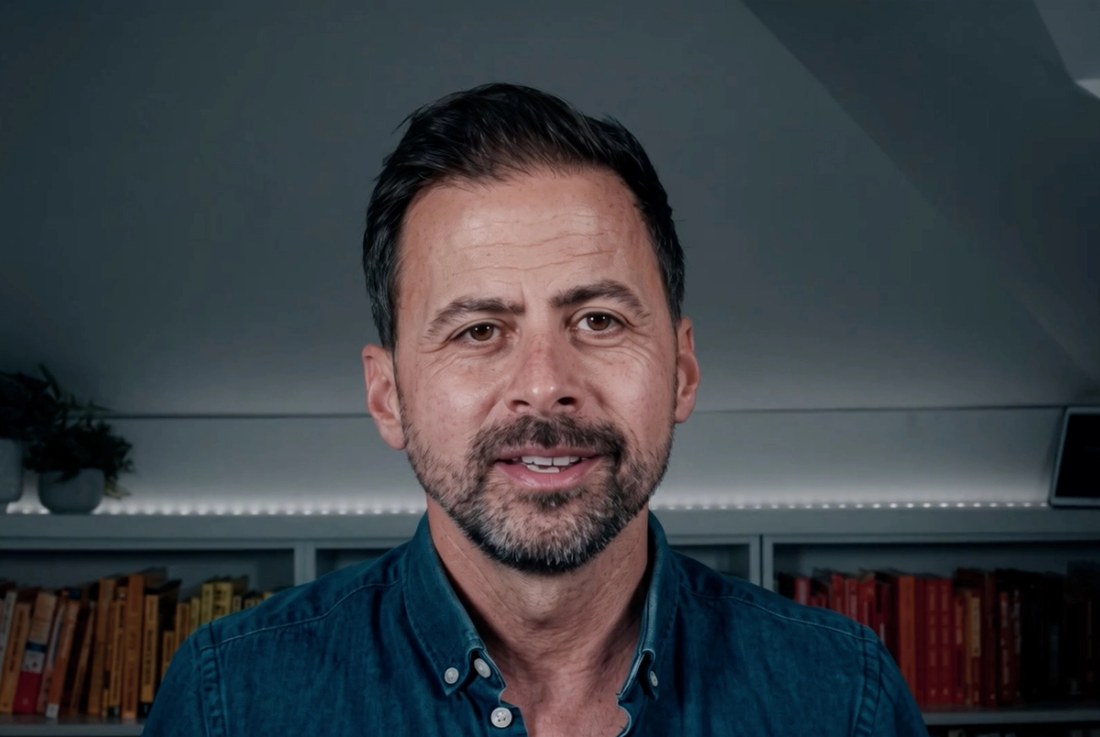
Ingo Rauth Ph.D.
Ingo Rauth Ph.D. is an educator, consultant, executive coach and advisor. He works on leadership development and on how people find, and lose, purpose at work.

Nobody Comes Back From the Beach a Hero
Why returning to work after a break feels like a sentence instead of a mission — and why the heroism of the return is authored, never handed out.

On Servant Leadership, and the Leader Who Disappeared
Servant leadership taken all the way to selflessness turns a leader into a committee. Why a team can only want what its leader visibly wants, and the small decisions that bring a leader back.