On Delight, and the Org Chart That Kills It
Why customer delight dies in promotion criteria, incentives and whose word counts, not in the design studio. And why seduction is a question for the COO before it reaches marketing.

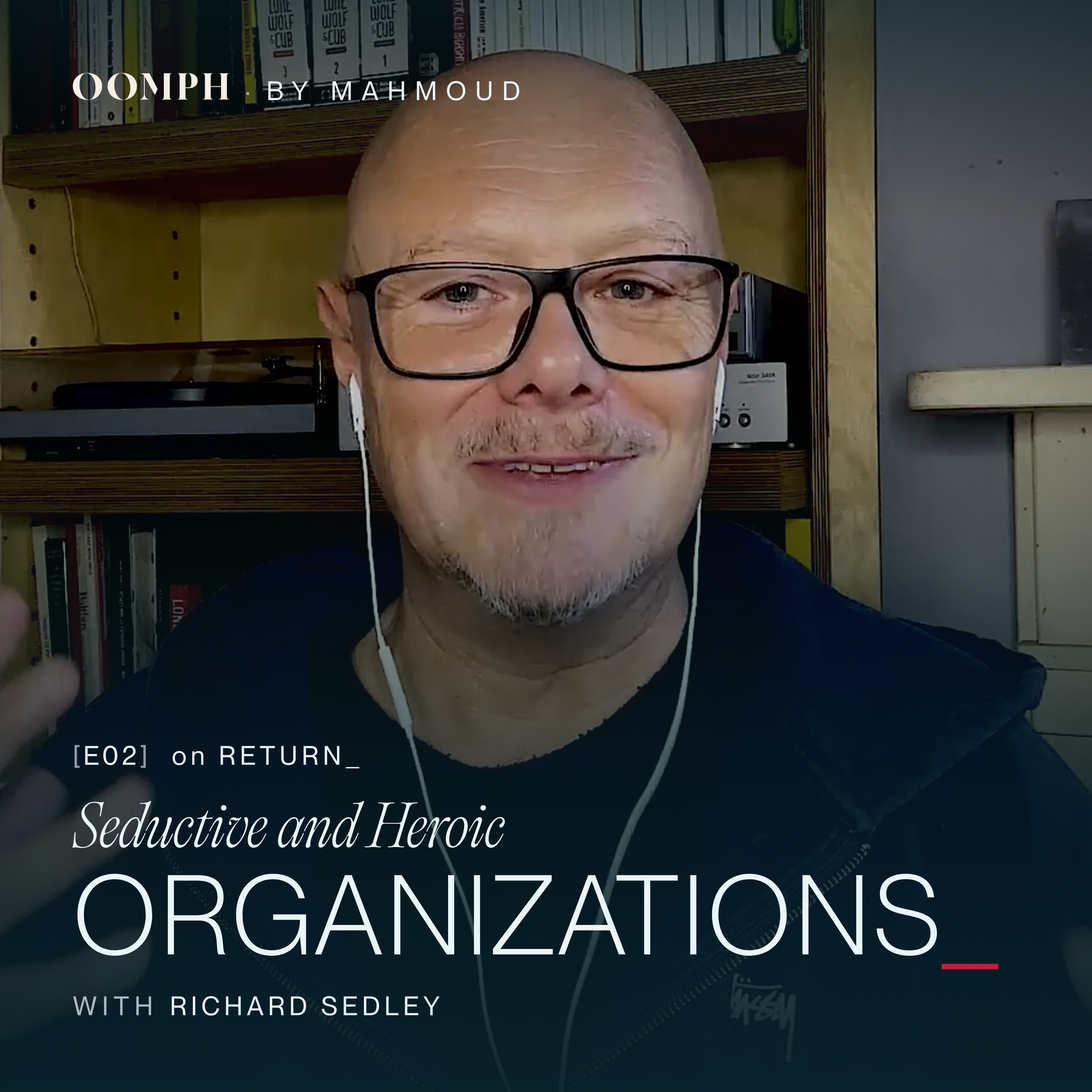
on Seductive and Heroic Organizations_
With Richard SedleyFormer Chief Design Officer, EY Seren
To the episode →A team sends its estimate to an internal customer. The internal customer calls the team's boss. The boss overrides the estimate — not once, as a judgement call, but by default, every time. Our host described exactly this on the show, from one organisation he had studied from the inside, and the ending writes itself: after a while the team stopped believing its word meant anything, and stopped feeling respected. Nobody in that building set out to kill delight. The org chart did it for them.
That is the argument of this piece, stated plainly: customer delight rarely dies in the design studio. It dies in the operating model — in how people are promoted, how they are rewarded, how teams are assembled, and whose word is allowed to stand. Seduction is a COO and CHRO question before it is ever a marketing one.
The studio is not the crime scene
When a brand goes flat, the post-mortem walks straight to the creative floor. The ideas were safe. The experience was competent and forgettable. Fire the agency, rewrite the brief, hire a bolder head of design.
We think the body is usually found somewhere else. Richard Sedley — former Chief Design Officer at EY Seren, and our guest in this episode — took the old line that culture eats strategy and went one step further. The operating model, he argued, eats both: how you incentivise, how you promote, how you put teams together. If that machinery leaves no room for seduction and delight, it will destroy them, however gifted the people inside it.
This is the Despite frame turned inward. An organisation can hire brilliantly, brief brilliantly, and still ship nothing anyone falls for — because the system it built quietly rewards something else.
How a good team becomes a delivery machine
Sedley put a name on the most familiar casualty. In his words, "sometimes product managers end up as what I would call delivery thugs." Good intentions, narrowed down to one job: get the thing out.
He was careful, and so are we. There is always a place for the delivery thug. If nothing ships, nothing works; seduction is not an alternative to a product that functions. The trouble starts when shipping becomes the only thing the organisation knows how to see, count and promote. Then the people closest to the product lose sight of where the more seductive gains are — and they lose it rationally, because that is what the scorecard asked of them.
The same machinery produces a sequencing error. Usability first, reliability next, delight last — if there is time. Sedley warned against that order. People don't always find a thing fun because it is easy; sometimes they find it easy because it is fun. Delight scheduled for the final sprint is delight that never arrives.
A team trained only to ship will ship. It will not *seduce*.
—OOMPH Editors
Whose word counts
Return to the overridden estimate, because it shows the second casualty. Sedley named the culture where someone does you down because it brings them up, and he was blunt about the cause: more often than not, the incentives. Get promotion and reward wrong and they can tear apart a team that was already working.
Override is the quieter version of the same damage. A team whose judgement is overruled as a matter of routine learns, very quickly, that caring is wasted effort. Pride needs a word that isn't overwritten. Without it, the people who are meant to represent the brand to its customers no longer feel they represent anything — and a customer can feel that from across the counter. (Where that pride goes when it is starved is its own story; our companion piece follows it into the complaints of your proudest people.)
None of this is personal malice. It is design — of the organisation, not the product. And design can be done on purpose.
What doing it on purpose looks like
The episode was not only a diagnosis. Between them, host and guest set out moves any operating leader can make:
- Audit the promotion criteria before the brand guidelines. If every path upward runs through on-time delivery, the organisation is breeding delivery thugs and calling it discipline. Put the seductive gains — the moment a customer smiles without being asked to — into what gets someone promoted.
- Reward what is creative, not only what is complete. Bonuses can follow the creative work as readily as the finished work.
- Build teams with someone whose job is the extra, not the deadline. Keep the shipper; give them a counterweight with equal standing.
- Move delight to the front of the sequence. Treat it as a design input from the first sprint, not a garnish for the last.
- Let the team's word stand. When an estimate or a judgement is overruled, make that the exception that needs a reason — never the default that needs none.
- Be open to what teams invent. One of Sedley's best examples of simple seduction was a toy shop's second, child-sized door beside the ordinary one — an idea, as far as he knew, that came from the team itself. And because expectations are more often wrong than right, test before deciding.
Much of this repairs damage done elsewhere: hiring people for their edge and then ironing it out, which we have argued in On Outsourced Heroism, and the slow depletion that controls cause, in On the Hardest Thing We Call Soft.
The honest price
Shipping still matters. An organisation that delights and never delivers is not seductive; it is unreliable, and unreliability is the fastest way to lose a customer's trust. The point is not to demote the delivery thug. It is to stop making everyone one.
And there is a price. As was said on the show, if it were easy, everyone would have done it. Rewriting promotion criteria is slower than rewriting a brief. Letting a team's word stand costs a senior leader the comfort of the last say. Most organisations will not pay it, which is exactly why the few that do become the ones people fall for.
The question for the next leadership offsite is not whether the brand is seductive enough. It is whether the org chart would let it be.
on Seductive and Heroic Organizations_
With Richard SedleyFormer Chief Design Officer, EY Seren
To the episode →More to Read
Adjacent threads. If this essay landed, these will too.