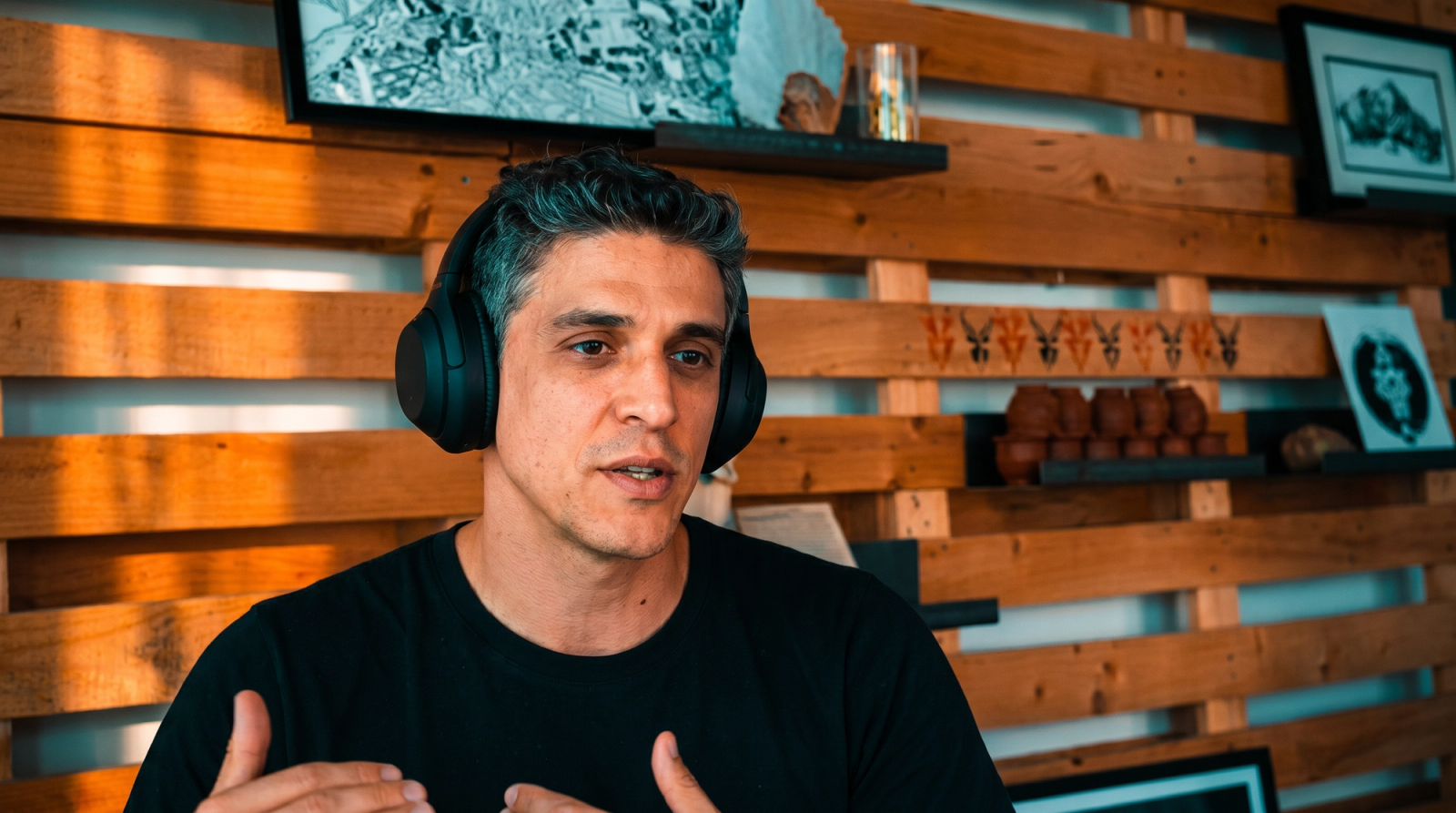
The Conversation
Tania wanted to surprise me in this episode so she brought a box of surprises they engineered at LifeLabs learning. Tania is known for so many things, but for us she’s the ultimate surprisologist since she coined the term in her book “Surprise: Embrace the unpredictable and Engineer the unexpected”. In her company and practice, she has grown a brand and culture that have embraced and embedded surprise in everything they do, and that made them very resilient to face the unexpected pandemic.
We had a bad surprise at the end of the episode, realizing she was not recording on her side … well, we were ready.
The conversation, chapter by chapter
Every chapter with what was said in it. Open one to read it, or play the episode from that moment.
00:0001The Essence of Surprise
Read
Tania LunaThink of surprise as a spice. You probably don't want to overspice your dish.
Mahmoud AbdelrahmanEveryone is trying to be innovative at the moment. Do you think this culture of surprise affects the innovation capabilities of organizations?
Tania LunaOkay, everyone's looking like this. What happens if you look at it like this?
Tania LunaLife has brought us together. This is my opportunity to actually make this person feel seen, feel valued, feel special. And that is the time when surprise becomes really meaningful.
Tania LunaI'm Tania Luna and I'm on OOMPH by Mahmoud.
Mahmoud AbdelrahmanAnd this is Season 1, O for OMG, On Magic and Surprising Customer and Employee Experience.
Mahmoud AbdelrahmanAlive Is the Title.
Mahmoud AbdelrahmanI want to first take from you your definition of surprise. What is it and how does it impact us?
Tania LunaYeah. So the short version is: surprise is our brain's reaction to something unexpected or misexpected. So I think something is going to happen, or I'm not even thinking of anything, and something happens. And for our brain, that's very important, because from an evolutionary perspective, the unexpected or the unknown demands that we pay attention to it. It requires us to go, "Oh, I don't want to be caught off guard again. So let me put a lot of my cognitive resources" — unconsciously, this is what's happening in the brain.
Tania LunaOne of the ways that we like to describe surprise is really as a sequence rather than one event. So we call it the surprise sequence. It's freeze, find, shift, share. Freeze is that first kind of one twenty-fourth of a second where you have the — we call it the duh face. You're just kind of in the moment. Then find is your brain going, "What's going on? What's going on? What does it mean? Is this real? Is this a trick? Is this good? Is this bad?"
Tania LunaShift is a really interesting one. That's when your brain kind of mends what we call the schema discrepancy. Maybe if I think that — I don't know. Okay, I'll talk about pigs again. I'm sorry. So a lot of times people are surprised by my pigs, because people don't associate pigs with, for example, being cuddly. So if you see me and my pig snuggling together, or my pigs being affectionate or smart or things like that, for some people, if they're not expecting that, it creates a schema shift, a shift in how they see things, so that in the future their brains are more prepared with that knowledge of, let's say, pigs.
Tania LunaBut it's important for obviously any area in life: what you learn about people, what you learn about brands. You want that shift to happen. You don't want that shift to be bad if you're talking about a brand or a customer. And then finally, share. That's when, because surprise creates such kind of this cognitive burden on our brains — it's so much work psychologically, physiologically — one of the ways we relieve that burden is to talk to other people about our surprising experiences. Again, if you're thinking about it as a brand, or even as a person, you want that sharing to be positive. You don't want that sharing negative.
Mahmoud AbdelrahmanCreating a positive word of mouth and something that people would really want to share. So from that point of view, if you want to sum up three impacts that are normally created by surprise from what you mentioned?
Tania LunaSurprise is an emotion intensifier. Surprise is the thing that allows our brains to learn. And surprise is a memory maker.
02:4602Surprise in Customer Experience
Read
Mahmoud AbdelrahmanIf we speak about that in the customer experience and customer relationship context, are you with customer surprise or are you against customer surprise?
Tania LunaWhat do you think?
Mahmoud AbdelrahmanNo, but I understand also at the same time that you will have your thought and perception on dos and don'ts within that.
Tania LunaI think that we can't just use surprise as a blanket term. I think we have to do everything we can to eliminate unpleasant surprise and to elevate positive surprise. But you have to be judicious with it. Think of surprise as a spice. You probably don't want to overspice your dish. So I think about removing negative surprise. For example, I think about, with my own clients, what are their expectations and where might we be under their expectations? Where might we disappoint them? Are we making them wait too long? Are we making them take too many steps? Are we causing confusion anywhere? Let's get rid of those surprises. We do not want those surprises. A surprising bill at the end of a service — you don't want that kind of surprise.
Tania LunaOn the other hand, what are their expectations and where can we jump above those? Not all the time, because we don't want it to feel like a roller coaster. We want people feeling kind of safe and comfortable with us, but every once in a while. So maybe, usually you get an invoice and it's just a boring invoice. Maybe we'll add a gift to it, or maybe we'll add a code for a free workshop they could take online. Usually you would expect a conversation with a company to feel very formal and scripted. One of the things we'd work hard on is making it feel unscripted and personal. We'll add jokes to it. We'll mention things that they said three months ago and say, "You mentioned three months ago that you really care about hiring inclusively. Here's a free resource for you that would make that easier for you."
Tania LunaSo the little things like that — sometimes they're playful, but I think the more meaningful surprises are the ones where the person feels really seen and heard and cared about.
Mahmoud AbdelrahmanIf you want to deliver that through our customer experience, how do you really make that possible and scalable and something that everybody can do? Not only Tania and the others at LifeLabs.
Tania LunaI think part of it is — honestly, part of it is who we hire. So we look for people who, in the interview process, talk about experiences they've had of creating thoughtful, meaningful, delightful experiences for others. I think everyone, honestly, or at least most people, like making other people feel good. I think that's actually built into our genes. But for us in particular, because it's such an important part of our experience that we try to create for our clients and for our team, we specifically look for that. We look for people who look at situations where someone was difficult to work with and find ways to turn it into a positive. We look for people who go out of their way to delight people. So that's step one. That makes it much easier to scale.
05:4303Building a Culture of Surprise
Read
Tania LunaStep two is we map the client experience. So we very visually show our team, including people who are directly working with customers and people who are indirectly working with customers. So in your first week at LifeLabs Learning, you get training on how — like, basically, how to be a client. And right in that experience, the first interaction we have is you're pretending to be a client of LifeLabs Learning. So that way we want people to have that empathy, the kind of visceral experience of what is it like on the other side.
Tania LunaAnd then once they've had a little bit of that experience, we show them that visual map and say, "Here are the different touch points. Here's what people are expecting and feeling during those touch points. Here are emotions we don't want them to have, and here are emotions we do want them to have." So we create kind of a touch point of both the actual experience and the emotional experience.
Mahmoud AbdelrahmanTo go back to the employee experience part of surprise and creating a culture of surprise, how can we do that? I mean, if you have quick tips, and also from your experience, what have you seen that has an impact on the organization itself?
Tania LunaI think impact — my gosh. I think about the whole year 2020. Our team thrived, I think. We were nervous, we were anxious, so many of our clients were struggling financially for a while. It was difficult, it was scary, but our team just really rose up to that challenge. And even if some people didn't have enough work, they took on other jobs. Everyone was just checking in with each other and saying, "What can I do? How can I help?" Our clients were incredibly stressed out, were incredibly anxious. So our team was just — there was like this outpouring of support for our clients.
Tania LunaWe had weekly, and sometimes three times a week, free sessions with over a thousand people on a Zoom call, where we would just share information for free, pass on tips, pass on support and encouragement. We have the Slack channel for our clients and for our People Ops or HR community, and we had our team in that Slack channel just looking for ways to help. And people were still kind of laughing and crying together at the same time. There was a lot of emotional space for emotion. And I think in a way that was really needed, and that's a dramatic version of it.
Tania LunaBut even day to day, I think a surprise culture is a resilient and an adaptive culture. And it's what we need today. If 2020 taught us nothing else, it's to expect the unexpected, to expect that the future will not look like the past. And in order to be able to rise up to that challenge and actually enjoy it, you need a culture that reinforces both embracing the unexpected and creating the unexpected.
08:29 04Surprise and Employee Engagement
Read
Tania LunaSo as for your first question of how to create that culture of surprise, I feel in some ways like I'm still so inside of it that I don't know yet if I have the easy kind of map. But let me tell you what my theory is. I think number one is make the intention explicit. So for example, within our company values, we don't say "create surprise," but we say one of our values is "always be learning." Another one of our values is "open the circle." And another one is "find a way to play." Another one is "choose courage over comfort."
Tania LunaAnd I think that combination of: this is going to be a place where we value courage, where we value learning, where we value play. And "open the circle" to us means: are you considering other people's needs, other people's perspectives, other people's views? Are you going out of your way to make people feel welcome here? And I think the combination of setting that up as, like, the blueprint for our culture has really paid off, because the people who join are the ones that are buying into those values. And they're seeing, as a company, this is how we make our company decisions. This is how we treat each other. This is how we interact. So I think that's number one: find some way to make it explicit.
Tania LunaThe other thing is, especially early on, or if you're trying to shift your culture to be more surprise-welcoming, I think you've got to kind of bombard people with positive surprise experiences. Early on, every single week we would have something surprising happen. We would have a guest visitor. We would have massages in the office while people were in meetings. And a lot of that was kind of company-led. And then as people started kind of becoming a part of it and expecting it, then we invited other people to be a part of it. And we would say, "Hey, now it's your turn. Now it's your turn. Now it's your turn."
Tania LunaSo really, the co-creating piece I think is so, so, so essential. And then you need to create some sort of systems for it. So whether it's a budget, or a ritual of taking turns creating some kind of experience for each other, I think the system needs to reinforce it as well. You can't just have a bunch of people saying, "Surprise people, it's important."
11:4605Crafting Meaningful Surprises
Read
Tania LunaI really love the idea that your budget is the best reflection of your strategy. So literally looking at your budget and saying, are we creating space for this? Whether it's by literally giving people money, or — where is it that people are so overworked and so exhausted that there isn't space for surprise and play? Like, are you putting enough money into your budget to give people permission to interact in kind of social and impractical, spontaneous ways, versus are you just working on everything we have to get done immediately? There needs to be space for surprise to happen.
Mahmoud AbdelrahmanAnd I think one interesting and lovely thing about what we have at the moment, with things being remote and virtual, I think within organizations we have much more access to virtual experiences, and then basically you can serve them experiences from all over the world. So it doesn't have to be someone that actually comes to your office to do something.
Tania LunaIt's really amazing. Yeah. Exactly.
Mahmoud AbdelrahmanEveryone is trying to be innovative at the moment. Do you think this culture of surprise affects the innovation capabilities of organizations?
Tania LunaYeah, I mean, innovation is a surprising way of looking at things, right? And if you have a culture where surprise is encouraged and practised, you're building out your surprise muscle, basically. So you have a way of interacting with people and with the world and with ideas where you're constantly asking, "How else can I look at this? Okay, everyone's looking like this. What happens if you look at it like this?" And I think that there's both resilience and the capacity for creativity and innovation in that.
Mahmoud AbdelrahmanWhat is your favourite personal tip? I know by now probably it's in the blood and DNA, and things happen by themselves. But there is also an element that if you create a lot of surprises, sometimes you become self-competing: how can you really make this much better than before? Because you also, in a way, are trying to surprise yourself if you want to do that. What is your personal tip on crafting surprises?
Tania LunaI think the thing that still serves me best is to have kind of the lens on of being a surprisologist. Like, I am a secret surprise spy in every conversation I have with everyone ever. And I'm paying attention to little hints they're dropping about the things that would mean something to them. And to me, it's not about topping surprise after surprise after surprise. It's all about: can I be a good enough listener and attentive enough to notice what's important to someone, so that that gives me the tools and the intel to be able to surprise them in a meaningful way?
Tania LunaAnd it's not like I go around surprising literally every single person I interact with, but as soon as I kind of train my ear to notice, "Hey, someone just said something meaningful to them" — sometimes it'll be a friend of mine, sometimes it'll be someone who works at the grocery store — that's my kind of assignment, almost, to find a way to surprise them. And that's another important thing: I think what matters is just always be on the lookout for it. You never know who is going to be that right surprise opportunity.
Tania LunaLike, right now we're in the process of moving, and we hired a contractor to put up a fence, because we have goats and pigs and dogs. And this wasn't my surprise, but my husband was like, "I found out that the contractor that we hired is paying for a hotel to be able to work on our property." So he found out what hotel he was staying at, he called the hotel, and he paid for his night at the hotel. Our contractor was not someone we expected to surprise, but you just kind of pay attention to: what are my surprise opportunities?
14:2706The Impact of Surprise on Innovation
Read
Tania LunaAnd it's delightful for everyone. It's delightful for the person, and I would say it's probably even more delightful for you as the surprisologist.
Mahmoud AbdelrahmanYeah, it basically becomes like a background process that's running all the time, right?
Tania LunaExactly, exactly. And it just kind of reminds you to recognize how much delight possibility there is in life. Especially these days, where a lot of us are feeling stuck inside, but as long as you're interacting with anyone, that's your opportunity to turn it into an experience that they're going to remember, an experience they're going to talk about, an experience that's going to, for them, define, maybe, even humanity. Right? Because if you get surprised, especially by someone you don't know all that well, all of a sudden you go, "Huh, maybe people are really nice," or "Maybe I can do that to someone else." You're sort of contributing to a shift in the way that people see themselves and others.
Mahmoud AbdelrahmanAnd I feel like beyond the delight that you get through a surprise, whatever has happened or whatever has been crafted, there is a very deep meaning: someone has actually seen you, and someone has actually noticed that bit of detail about you. And the feeling of worthiness, the feeling of being seen, being attentive to that, is very, very deep. Because I think at the essence of it is like, okay, that person actually went out of their way and they did this for me. I'm that important to life, something like that.
17:4507The Deeper Meaning of Surprise
Read
Tania LunaAnd going back to the customer experience: a lot of times when you think about customer delight, it feels very strategic or engineered. But at the end of the day, it's like, can you at least momentarily fall in love with this person that you are serving in some way? Can you think of your customers and say, "I don't just want them to buy things from us. Life has brought us together. This is my opportunity to actually make this person feel seen, feel valued, feel special"? And that is the time when surprise becomes really meaningful.
Mahmoud AbdelrahmanI agree. That's really very deep, and it's very easy to do. I think a lot of us have these attention issues. Can you just focus on the now, on the moment, on that interaction that's happening now? And that doesn't really require procedures or budgets or anything. Thank you very much, Tania. I really, really enjoyed doing this interview with you.
Tania LunaAbsolutely, thank you.
James SamperiMy name is James Samperi and I'm on Stunning Moments.
Adam LawrenceThis is Adam Lawrence and this is the James Bond Experience.
Michael RousellI'm Michael Rousell and I'm on X-Raying Surprise.
Episode Shorts
Bite-sized clips from the conversation — the moments worth replaying.


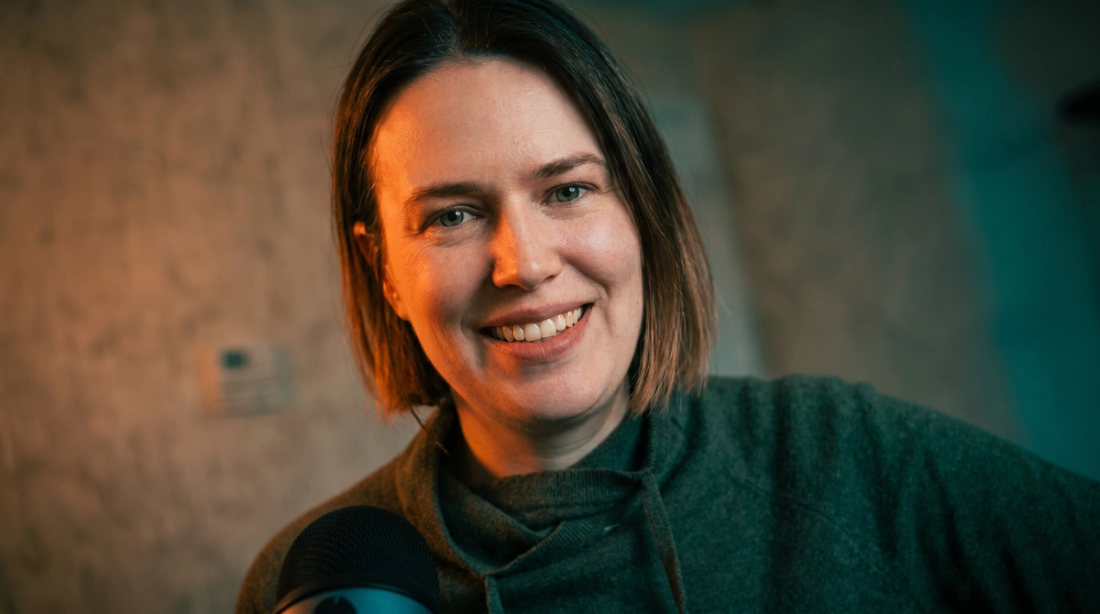
Tania Luna
TED Speaker with 1.8 million views of her talk on “The Power of Perspective”, Co-author of he first non-fiction books dedicated to Surprise; “Surprise: Embrace the unpredictable and Engineer the unexpected”. Tania is the co-founder, and former co-CEO of LifeLabs Learning. She is also a researcher, educator, and writer for Psychology Today, Harvard Business Review, and multiple other publications. Tania has recently published her new book “The Leader Lab: How to Become a Great Manager, Faster. Tania is also the co-host of the podcast Talk Psych to Me.

The Surprise You Don't Choose
The faculty that lets a company delight on purpose is the one that saves it when reality does the surprising. Why surprise-averse organizations optimise themselves into brittleness.

Comfortable Is Not Alive
Reliability earns trust; sameness kills desire. Why the most predictable brands are the most forgettable — and where aliveness actually hides.

Seen, Not Served
Engineered delight feels hollow because it skips the one thing that creates desire — being seen. Why attention, not amenity, is what makes a brand wanted.